Imagine looking at your electric bill and seeing those numbers creep up month after month, while the sun is shining right outside your window.
Sounds familiar, right? You’re not alone—homeowners and business owners alike are wrestling with rising energy costs, and many wonder if there’s a smarter way to harness that free sunlight.
Enter the solar lease. Instead of buying panels outright, you essentially rent them from a solar provider, paying a fixed monthly amount that’s typically lower than your current utility bill.
What does that feel like in real life? Picture a family in Phoenix swapping out their old HVAC‑driven electricity spikes for a predictable, gentle charge that matches their lifestyle, or a small café watching its overhead shrink without a hefty upfront investment.
The appeal isn’t just the lower monthly cost. A solar lease often bundles maintenance, insurance, and performance monitoring, so you don’t have to become a solar‑tech expert overnight.
But there are a few things to keep in mind before you sign on the dotted line. Some leases lock you into a contract for 20 years, and you’ll need to check who owns the tax credits and whether you can transfer the agreement if you move.
At Pep Energy, we’ve helped dozens of homeowners and local businesses navigate those fine print details, making sure the lease terms line up with their long‑term goals.
So, why does a solar lease matter to you right now? Because it can turn a dreaded bill into a manageable, predictable expense while still letting you enjoy the environmental perks of clean energy.
In the next sections we’ll break down how a lease works, compare it to buying, and walk you through the numbers so you can decide if it’s the right fit for your home or business.
Ready to explore? Let’s dive in together.
TL;DR
A solar lease lets you enjoy clean power with a predictable, lower monthly bill while avoiding upfront panel costs and maintenance headaches. We’ll walk you through how leases work, compare them to buying, and help you decide if this flexible financing fits your home or business needs in today’s market.
What Is a Solar Lease and How Does It Work?
Imagine you could power your home with clean energy without spending a dime on a massive upfront purchase. Sounds like a dream, right? That’s exactly what a solar lease promises.
In a solar lease, a third‑party provider installs the panels on your roof (or on your property) and you agree to pay a fixed monthly fee to use the electricity they generate. The provider retains ownership of the system, handles maintenance, and often takes care of any necessary permits.
So, who ends up paying what? You pay a predictable lease payment—usually lower than your current utility bill. The provider collects any tax credits or rebates, which is why they can afford to keep the price low for you.
But how does the money flow? Each month, the provider bills you for the energy your system produces. If the sun is shy and production dips, the lease agreement typically guarantees a minimum output, so you won’t see a surprise spike in your bill.
Does this mean you lose the tax benefits? Yes, the federal Investment Tax Credit (ITC) stays with the owner of the panels, so you don’t claim it. However, many leases are structured so the savings on your electric bill more than offset that missed credit.
Let’s break down the typical steps:
1. System design and proposal
The leasing company assesses your roof’s orientation, shading, and structural integrity. They then design a system that matches your energy usage goals.
2. Signing the lease
After you review the proposal, you sign a contract—usually for 20 years. The agreement spells out the monthly payment, expected production, and who’s responsible for upkeep.
Want the nitty‑gritty details? Check out our step‑by‑step guide to solar leasing for a deeper dive.
3. Installation
The provider’s technicians install the panels, connect the inverter, and set up the monitoring system. Because they own the hardware, they also take care of any warranty claims.
4. Ongoing payments and performance monitoring
Every month you receive a bill. Most companies also give you access to an online portal where you can watch real‑time production, compare it to your usage, and see how much you’re saving.
What happens if you move? Many leases are transferable, meaning the new homeowner can take over the agreement. This can actually boost your property’s resale value because the buyer inherits a lower‑cost energy source.
Now, here’s a tip most people overlook: ask about escalation clauses. Some leases increase the monthly payment by a small percentage each year to account for inflation. Knowing this up front helps you budget accurately.
For residential customers, a solar lease can be a low‑risk way to dip your toes into renewable energy. For businesses, the same model applies—but you’ll also want to consider how the lease impacts your corporate sustainability reporting.
If you’re a solar installer or a clean‑energy marketer, mastering online visibility is key. Tools like the SEO content automation guide can streamline your blog production and attract more leads.
Similarly, building high‑quality backlinks can boost your site’s authority. The top link‑building software solutions review offers a quick comparison of platforms that can help you earn those valuable links.
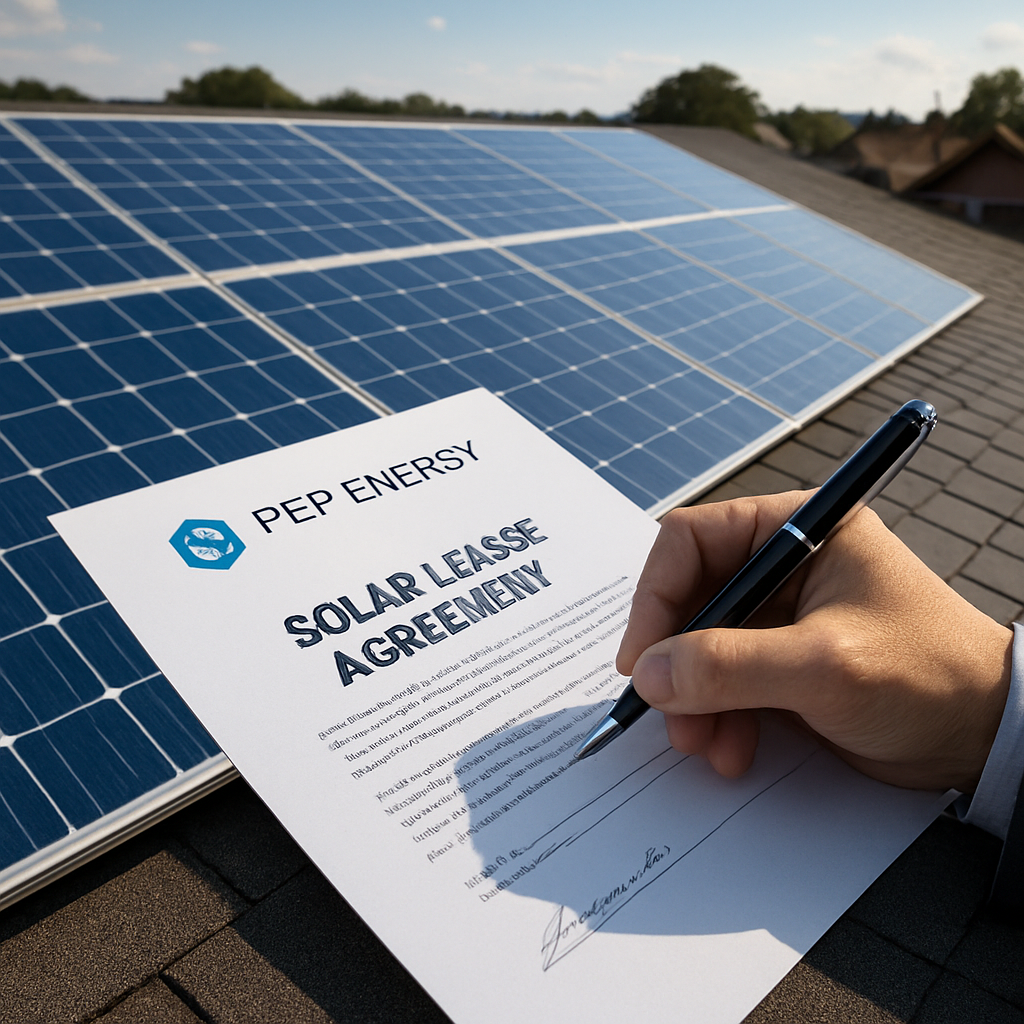
Bottom line: a solar lease lets you enjoy clean power with minimal hassle and predictable costs. It’s not ownership, but it’s a proven pathway to lower bills and a greener footprint—especially if you’re not ready for a big cash outlay today.
Key Benefits and Drawbacks of Solar Leasing
Let’s be honest: the idea of a solar lease can feel like a mixed‑bag of promises and fine print. You’re looking for lower bills without the headache of owning hardware, but you also don’t want a surprise down the road. In our experience at Pep Energy, the best way to decide is to break the deal into two simple questions: “What do I gain today?” and “What might I lose later?”
Why many homeowners and business owners choose a solar lease
First off, the upfront cost is practically zero. That means you can get a system installed without draining your savings or taking out a loan. The leasing company foots the bill, handles permits, and takes care of any maintenance – you just sign a contract and start seeing your utility bill shrink.
Because you’re paying a fixed monthly amount, budgeting becomes a breeze. Most leases include an annual escalator that’s usually slower than the average utility rate increase, so over time your payment stays lower than what you’d otherwise pay the grid.
And there’s a comfort factor: the installer owns, monitors, and repairs the system for the entire term. If an inverter fails on a rainy Tuesday, you won’t be the one hunting down a technician; the leasing company sends a crew, often at no extra charge.
For businesses, that predictability can be a game‑changer when you’re trying to forecast operating expenses. A stable energy cost line item makes it easier to allocate resources to growth instead of worrying about spikes in electricity prices.
Want a quick rundown of the main perks? Check out Palmetto’s homeowner’s guide to solar leases – it spells out the zero‑down, predictable‑payment, and worry‑free operation benefits in plain language.
Potential drawbacks you shouldn’t ignore
Now, let’s flip the coin. Because you never own the panels, you miss out on the federal Investment Tax Credit (ITC) and most state rebates – those incentives stay with the leasing company. That can translate into a higher total cost over the life of the agreement compared with outright ownership.
Another hidden cost is the lease transfer process. If you sell your house before the lease term ends, the new buyer has to assume the lease or you’ll need to negotiate a buyout. That extra step can slow down a sale or even affect the offer price.
Speaking of resale value, leased panels don’t add equity to your home the way owned systems do. While the monthly bill drops, the property itself doesn’t gain the same “solar premium” that buyers often appreciate.
Finally, most contracts lock you in for 15‑25 years. If utility rates plateau or you decide to switch to a different renewable solution, getting out early can mean termination fees that eat into any savings you’ve already realized.
For a side‑by‑side comparison of leasing versus buying, Palmetto’s leasing‑vs‑buying solar guide offers a clear table of pros, cons, and the financial trade‑offs you’ll face.
How to weigh the pros and cons for your situation
Here’s a quick checklist you can run through while you’re reviewing a lease proposal:
- Is the monthly payment lower than your current utility bill?
- What’s the annual escalator rate, and how does it compare to historic utility price hikes in your area?
- Does the contract include a buyout option after a few years?
- How easy is the lease transfer process if you move?
- What maintenance and monitoring services are covered?
If you can answer “yes” to most of those, a lease might be the smooth‑entry path you need. If the answers raise red flags, you may want to explore a solar loan or cash purchase instead.
One tip we often share: run the numbers with a solar‑lease calculator before you sign anything. It helps you see the long‑term total cost versus the potential savings, and it surfaces any hidden escalator surprises.
Bottom line: a solar lease can be a low‑risk, low‑maintenance way to start harvesting sunlight today, but it’s not a one‑size‑fits‑all solution. By matching the lease’s benefits to your cash flow, timeline, and long‑term plans, you can decide whether the trade‑off between immediate savings and future equity makes sense for you.
How to Evaluate a Solar Lease Offer
So you’ve got a solar lease proposal on your kitchen table. It looks tidy, the monthly payment is lower than your current bill, and the installer promises “set‑and‑forget” maintenance. Before you sign, let’s walk through a practical, no‑fluff checklist that will give you confidence you’re not trading tomorrow’s equity for today’s convenience.
Step 1: Gather every detail from the contract
First thing’s first – pull the actual lease agreement, not just the glossy one‑page summary. Look for:
- System size (kW) and expected annual production (kWh)
- Monthly payment amount and payment start date
- Length of the contract (usually 15‑25 years)
- Any escalation clause – the percentage the payment will rise each year
- Buyout or early‑termination options, and the price attached
If the document is missing any of these, ask for clarification before you move on.
Step 2: Crunch the numbers
Grab a spreadsheet or a simple calculator and plug in the numbers. Start with today’s utility bill, then add the annual escalator (e.g., 2%). Project the lease payment for the full term and compare it to the projected utility cost if you stayed on the grid. Remember to factor in the average utility‑rate increase in your area – often 3‑5% per year.
Most homeowners find that a quick “pay‑back” check – when the cumulative lease savings equal the total payments – gives a clear signal. If the pay‑back period stretches beyond the lease term, you may be better off with a loan or cash purchase.
Step 3: Check the escalator and buyout clauses
Escalators are the silent cost creeper in many leases. A 2% rise may sound small, but over 20 years it adds up to roughly a 45% increase in your monthly bill. Ask the provider:
- Can the escalator be capped?
- Is there a fixed‑rate option?
- What’s the buyout price after, say, five years?
A reasonable buyout gives you flexibility if you decide to own the system later or if you move.
Step 4: Verify tax and property implications
Because you don’t own the panels, you won’t claim the federal Investment Tax Credit, but the lease can still affect your property tax bill. Some states treat leased solar as a taxable improvement, while others offer exemptions. New York, for example, has a detailed appraisal model that municipalities use to assess solar and wind systems (see NY tax appraisal guidelines). If you live in a jurisdiction with a similar system, ask the provider how the lease will be reported to your assessor.
Understanding this early can prevent an unexpected property‑tax hike down the line.
Step 5: Test the provider’s support and transparency
Even the best‑priced lease can turn sour if the installer disappears when something breaks. Use a reputable source like SolarReviews’ question checklist to vet the company. Ask about:
- Warranty coverage for panels and inverters
- Response time for service calls
- Availability of a local, NABCEP‑certified technician
- How they handle a lease transfer if you sell your home
If the answers are vague or you get push‑back, that’s a red flag.
Quick evaluation checklist
- Monthly payment < current utility bill?
- Escalator ≤ historic utility‑rate growth?
- Buyout option and price disclosed?
- Property‑tax impact understood?
- Provider offers clear warranty, service, and transfer terms?
Tick off each item. If you’re left with more “maybe” than “yes,” pause and ask for a revised offer or explore alternative financing.
Bottom line: a solar lease can be a low‑risk entry point, but only if the math, the contract language, and the provider’s track record line up with your financial goals and long‑term plans. Use this step‑by‑step approach, and you’ll walk away feeling empowered, not anxious.
Comparing Solar Lease Options: A Quick Reference Table
Let’s cut to the chase: not every “solar lease” is built the same way.
Some are simple, predictable monthly rents. Others behave more like energy contracts with performance guarantees, escalators, and buyout windows.
So, how do you compare quickly without getting lost in legalese?
Quick comparison table
| Feature | Lease Type | What to watch |
|---|---|---|
| Monthly payment structure | Fixed‑price lease | Flat monthly fee; great for budgeting but confirm what’s included (maintenance, insurance). |
| Price tied to production | Pay‑per‑kWh or PPA (power purchase agreement) | Lower upfront cost, payment varies with production; check guaranteed minimums and weather/seasonal effects. |
| Escalator | Escalator lease (annual increase) | Often 1–3%/yr; compare that to your local utility’s historic growth to estimate long‑term value. |
| Flexibility at sale | Transferable vs. locked | Ask how a buyer assumes the lease or what a buyout after 5 years costs. |
| Ownership & incentives | Third‑party owned lease | Provider keeps tax credits; that’s how they lower your monthly cost. Verify warranty terms. |
That table gives you the quick look. Now here’s how to use it like a pro.
Three short, practical steps to compare offers
Step 1: Put the offers side‑by‑side for the first 5 years, not just the first year.
Why? Because an initial low monthly fee with a 2.5% escalator can flip the savings after year three.
Step 2: Check production guarantees and ask for historical production data from the installer’s portfolio.
If they promise 10,000 kWh a year, ask what happens if you get 9,000. Is there a credit, or do you still pay full lease?
Step 3: Confirm the transfer and buyout terms in writing. Can you buy the system after 5 years, and at what formula?
If you plan to sell the home, a transferable lease is non‑negotiable. If you plan to stay 20+ years, get the buyout math.
Real‑world examples and tips
Imagine a homeowner in Phoenix comparing two offers: one is a fixed monthly lease that’s $30 cheaper than their current bill but has a 2.5% escalator; the other is a PPA that varies but offers a five‑year buyout option.
For the Phoenix homeowner, predictable escalators that track below local utility inflation look better if they value stability; the PPA may make sense if they want upside when production outperforms weather assumptions.
For a small business with irregular hours (think cafe or well‑lit retail), a PPA tied to kWh can be attractive because payment follows actual generation — but only if the provider’s guarantee and monitoring are airtight.
In our experience, the smartest buyers do this: demand an estimated 20‑year cost curve from each provider, then stress‑test it with a 1–3% utility rate scenario and a 0% production shortfall.
Need a technical policy or lifecycle reference while you compare lease claims? For deeper technical background on distributed system performance and policy context, see the technical assessments from research organizations such as NREL and the MIT Energy Initiative (technical working paper). For example, NREL’s reports and MIT’s energy white papers give context on degradation, incentives, and long‑term system accounting that are useful when evaluating leases (NREL technical review, MIT Energy Initiative policy paper).
So, what should you do next?
Get the same 6 data points from every proposer: monthly payment, escalator, guaranteed annual production, buyout formula, transfer rules, and maintenance inclusions. Put them into a spreadsheet, run a 5/10/20‑year scenario, and ask the hard question: does this lease align with your timeline and tolerance for risk?
Final tip: if the paperwork feels vague, walk — better deals come from clarity, not from pressure.
Steps to Sign Up for a Solar Lease with Pep Energy
So you’ve decided a solar lease might be the right move, but the process can feel a bit like reading a contract in another language. Don’t worry—we’ve broken it down into bite‑size steps that feel more like a friendly coffee chat than a legal marathon.
Step 1: Start with a quick eligibility check
Grab a pen or open a note on your phone and jot down a few basics: your address, roof orientation, and average monthly electric bill. Pep Energy’s online intake form will ask for the same info, but having it handy speeds things up.
If you own a business, add your peak‑hour demand and any future expansion plans. That way the design team can size the system so it matches both today’s needs and tomorrow’s growth.
Step 2: Schedule a free site survey
One of our certified technicians will swing by (often within a week) to take measurements, check shading, and snap a few photos. They’ll also answer any “what‑if” questions you have—like, “What happens if a tree falls?” or “Can we add a battery later?”
During the visit, ask for a rough production estimate. In our experience, seeing a simple chart that translates sun hours into kilowatt‑hours makes the abstract numbers feel concrete.
Step 3: Review the custom proposal
Within 48 hours you’ll receive a PDF that lays out three things: the system size, the monthly lease payment, and any escalator rate. Look for these key line items:
- Monthly payment – is it lower than your current bill?
- Escalator – typically 1‑2% per year; compare it to historic utility hikes in your area.
- Buyout option – what’s the price after 5 or 10 years?
Take a moment to run the numbers in a spreadsheet. If the cumulative lease cost stays below what you’d pay the utility over the same period, you’re on solid ground.
Step 4: Clarify the fine print
Contracts can hide surprise fees. Ask the representative to spell out:
- Who covers insurance and property‑tax implications.
- What maintenance tasks are included (panel cleaning, inverter replacement).
- How a lease transfer works if you sell your home or move your business.
We always recommend getting those answers in writing before you sign. A quick email recap saves headaches later.
Step 5: Sign the lease
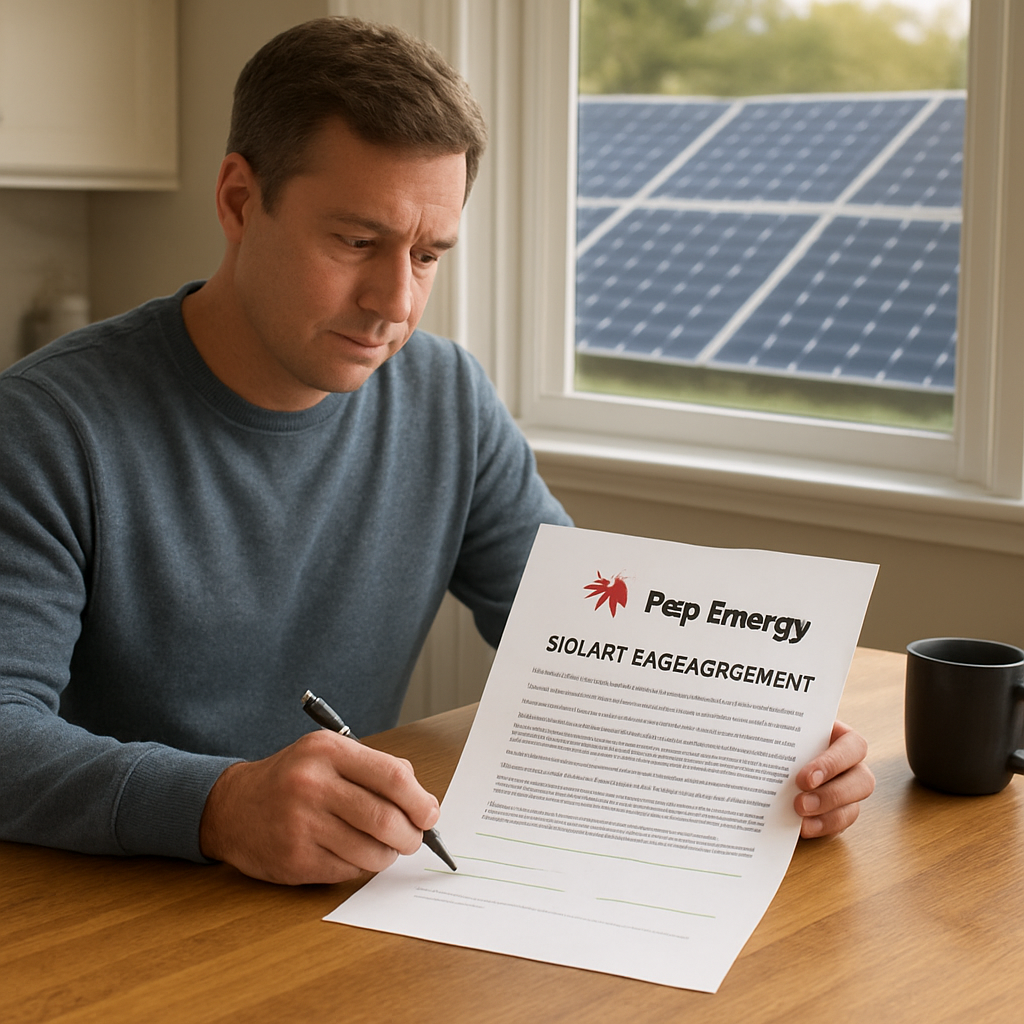
When everything checks out, you’ll receive a digital signing link. You can e‑sign from your laptop or phone – no need to print, scan, or fax. After you sign, Pep Energy will file the interconnection agreement with your utility, so the grid knows you’re feeding clean power back.
Keep a copy of the signed lease in a safe place (cloud storage works great). It’s the reference point for future escalator adjustments or buyout calculations.
Step 6: Installation day
Our crew arrives, usually within a few weeks, to install the panels, inverter, and monitoring hardware. Because the equipment stays on Pep Energy’s books, you won’t receive a separate warranty packet; the lease itself guarantees performance for the contract term.
While the team works, feel free to watch the process or ask questions. A lot of homeowners are surprised at how quick and clean the install can be.
Step 7: Start monitoring and enjoy savings
Once the system is live, you’ll get login credentials to an online portal where you can see real‑time production, compare it to your usage, and track monthly savings. If anything looks off, the portal also lets you submit a service ticket – the same day response we promise to all our clients.
And that’s it. From the first eligibility note to the moment you see your first bill shrink, the journey is straightforward when you follow these steps.
Conclusion
So, after walking through every step—from checking eligibility to watching your first bill shrink—it’s clear that a solar lease can feel like the easy button for clean power.
Remember the two things that mattered most: a lease that keeps your monthly payment under what you’re already paying, and an escalator that stays slower than your utility’s rate hikes. If those line up, you’re probably in a good spot.
What we’ve seen at Pep Energy is that homeowners love the hands‑off experience, while business owners appreciate the predictable expense line item. Both groups also value the ability to monitor production in real time and get same‑day service if something goes sideways.
Before you sign, run a quick “pay‑back” check in a spreadsheet: total lease cost versus projected utility cost over the contract term. If the lease wins, you’ve got a solid financial case.
And don’t forget to stash a digital copy of the signed lease where you keep other important docs—cloud storage works great for quick reference later.
Keep an eye on the portal; seeing those kilowatt‑hours stack up is surprisingly satisfying.
Ready to lock in lower bills and cleaner energy? Take the next step with Pep Energy and let the sun do the heavy lifting for you.
FAQ
What exactly is a solar lease and how does it differ from buying a system?
A solar lease is a contract where a third‑party provider installs and owns the panels on your roof, while you pay a fixed monthly fee to use the electricity they generate. You never own the hardware, so you don’t claim the federal Investment Tax Credit or any local rebates. In contrast, buying means you front the cost (or finance it), own the system, and keep all incentives and resale value.
How is the monthly payment calculated and what should I watch for?
The provider estimates your typical energy use, sizes the system accordingly, and then sets a lease rate that’s usually lower than your current utility bill. Look for the base payment, any annual escalator percentage, and whether the rate includes maintenance, insurance, and monitoring. A common escalator is 1‑2% per year—make sure that stays below historic utility rate increases in your area.
Can I transfer the lease if I move or sell my property?
Most reputable lease agreements include a transfer clause that lets the new homeowner assume the remaining term. You’ll typically need to notify the leasing company and provide a copy of the sale contract. Some providers charge a small administrative fee, but the process is usually straightforward. If the lease isn’t transferable, you may have to buy out the remaining balance or face early‑termination penalties.
What happens if the system produces less electricity than promised?
Leases often guarantee a minimum production level. If actual output falls short, the provider must either credit you for the shortfall or adjust the monthly payment so you don’t pay for power you didn’t receive. Ask for the performance guarantee in writing and request historical production data from similar installations to gauge realistic expectations. Also ask how often the system is inspected and whether any performance credits roll over to the next month.
Are there hidden fees or early‑termination costs I should be aware of?
Read the fine print for items like service call fees, insurance surcharges, or fees for adding extra panels later. Early‑termination clauses can be costly—sometimes 6‑12 months of payments plus a “buy‑out” amount based on the system’s remaining value. If you think you might move within the lease term, negotiate a lower buy‑out price up front. Make sure the lease document lists any administrative charges upfront so you can compare offers side‑by‑side without surprise costs.
How does a solar lease affect my property tax bill?
Because the leasing company retains ownership, many jurisdictions treat the system as a taxable improvement on the property. Some states, like New York, have appraisal rules that can increase your assessed value. Ask the provider how they report the lease to the assessor and whether they offer a tax‑exemption certificate. Understanding this early can prevent an unexpected tax hike. Some municipalities also offer a property‑tax freeze for leased solar, so ask if that option applies in your county.
Do I need to handle maintenance or repairs?
One of the biggest perks of a lease is that the provider is responsible for routine maintenance, panel cleaning, and warranty repairs. You just report an issue through the portal or service line, and they schedule a technician—often at no extra charge. Keep records of any service tickets; they’re useful if you later need to prove that the provider met their obligations.