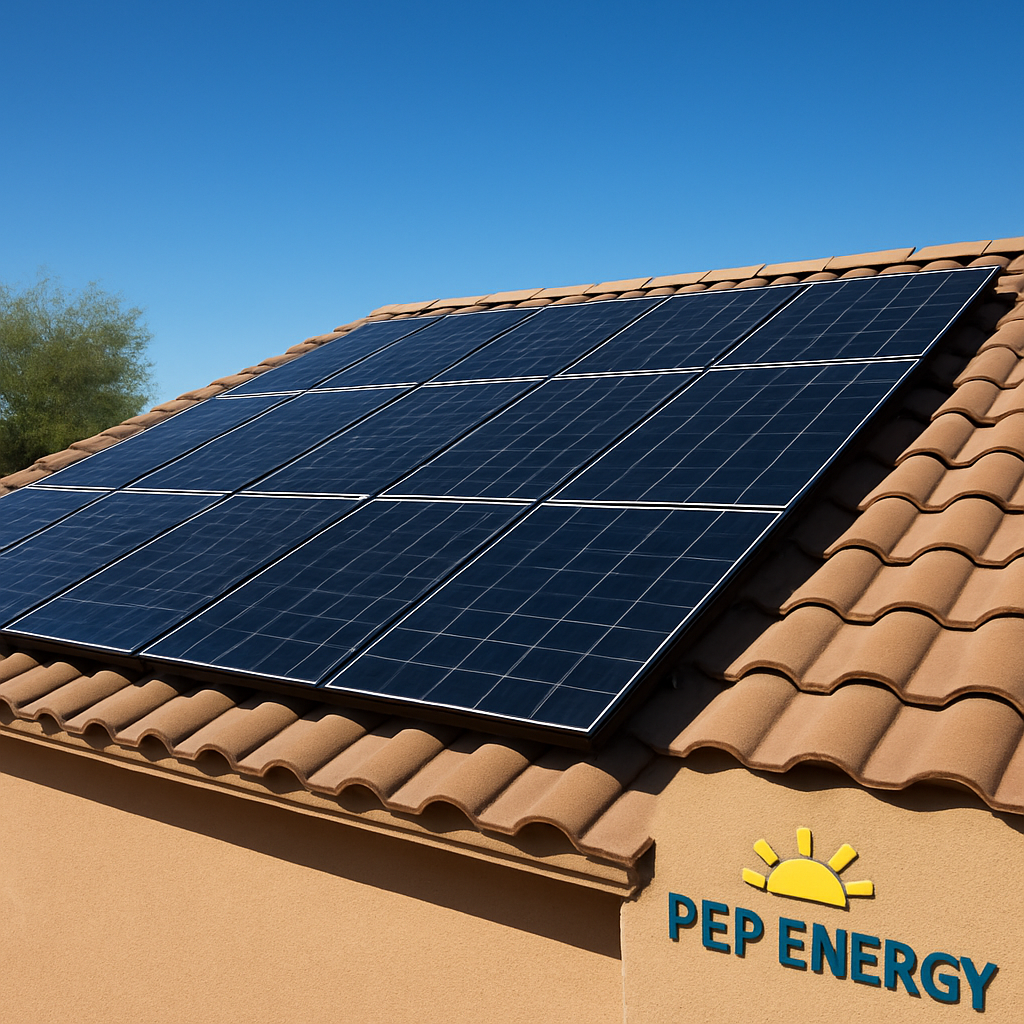
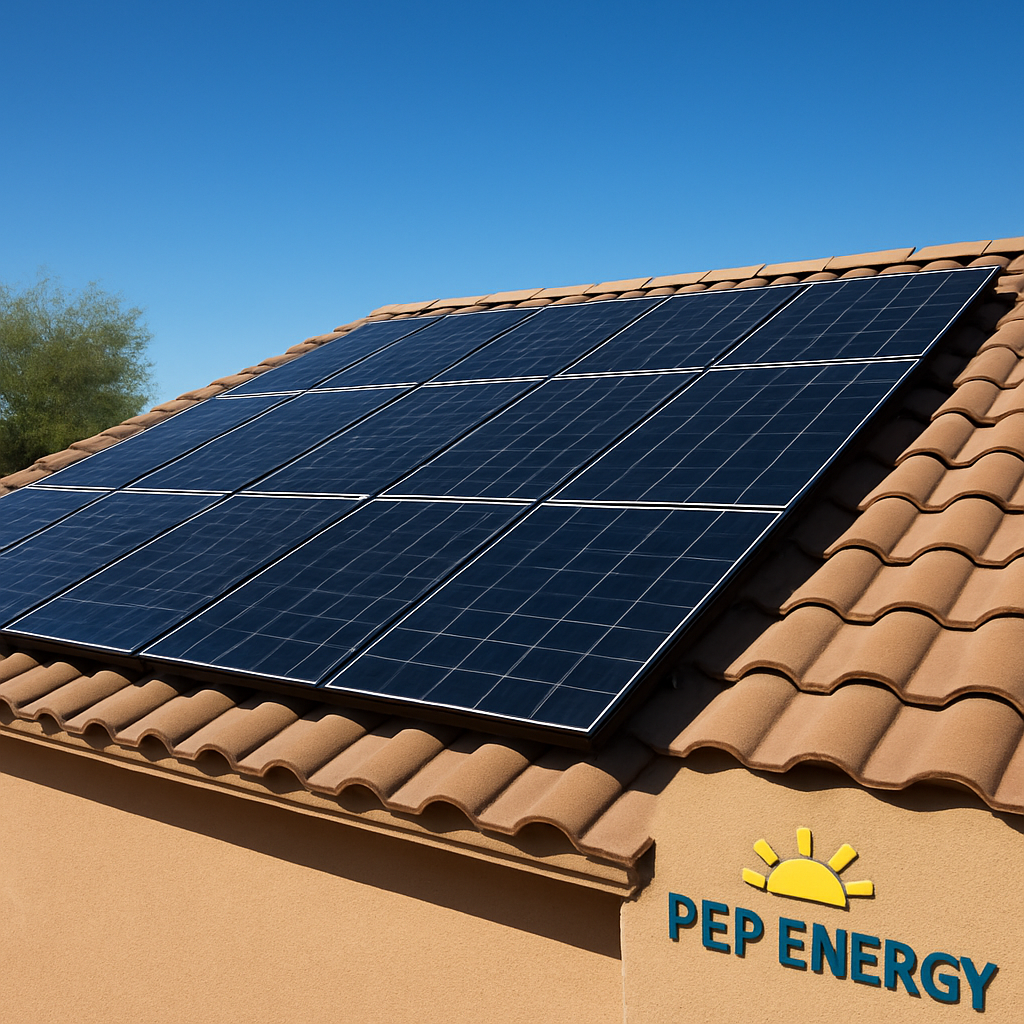
Let me be completely honest: hunting for the top solar installer in Arizona often feels like trying to spot a mirage in the heat.
You’ve probably stared at a few quotes, wondered if the panels will actually work with your roof’s angle, and asked yourself, “Am I making a smart move or just another expense?”
That moment of doubt is exactly why we start with the basics – what really matters when you’re a residential homeowner or a business owner looking to go solar.
First off, think about your daily energy rhythm. Do you charge a battery after work, or does your office run on lights and computers from 9‑to‑5? Knowing that helps you match the right system size.
In our experience at Pep Energy, the projects that stick around the longest are the ones where the installer walks you through the whole process, from the initial site survey to financing options, without drowning you in jargon.
So, what should you watch for? Certifications are a good start – look for NABCEP‑certified technicians. But don’t stop there; ask about their track record with solar leasing and financing, especially if you’re leaning toward a low‑up‑front plan.
Picture this: a sunny afternoon, you glance at your utility bill and see the numbers shrinking month after month. That’s the payoff many of our customers describe after a year of clean, predictable energy.
But there’s a catch – not every installer offers the same warranty depth or service response time. A quick phone call to a current client can reveal whether the company truly backs their work.
And what about the tech? Modern inverters with smart monitoring can alert you if a panel underperforms, saving you headaches later. It’s a small feature that makes a huge difference in peace of mind.
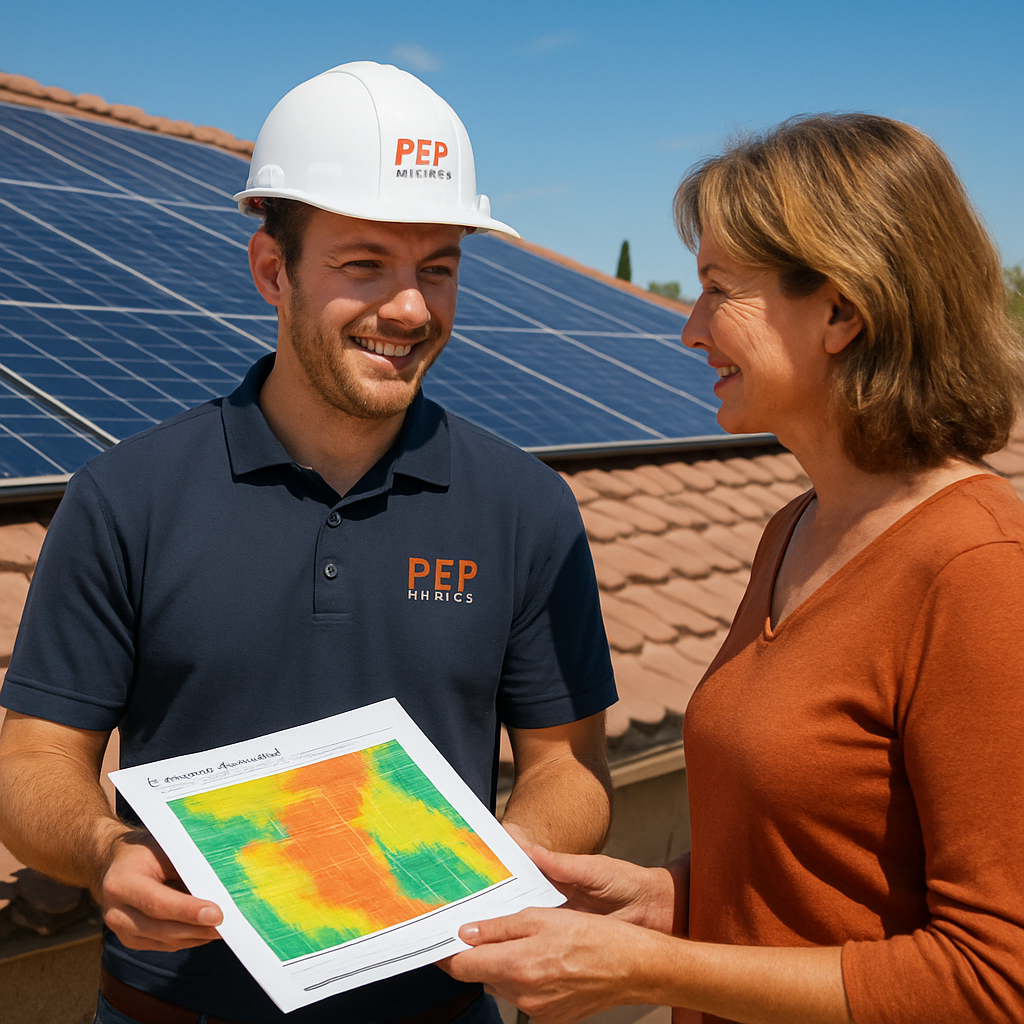
Now, imagine you’re ready to take the plunge. You’ve narrowed the list, checked credentials, and weighed financing. The next step is a no‑pressure site visit where the installer sketches out exactly how the panels will sit on your roof, showing shade analysis and expected production.
If that sounds like the kind of transparent, hands‑on guidance you want, you’re already on the right path to finding the top solar installer in Arizona.
Let’s dive deeper into the criteria that separate the good from the great, and you’ll see why a little homework now saves you time, money, and uncertainty later.
TL;DR
Choosing the right solar partner in Arizona means looking at certifications, warranty depth, and transparent financing; we break down each factor so you can spot the top solar installer in Arizona without guesswork.
Use our quick checklist and feel confident your roof will start delivering clean, predictable energy soon today.
1. Why Pep Energy Ranks as a Top Solar Installer in Arizona
When you stare at the desert sky and think about catching that endless sun, the first question is usually “who can actually turn that light into reliable power for my home or business?” That’s the moment we love because it’s where expertise meets trust.
1. Local expertise that reads the Arizona sun like a map
We’ve been installing panels across Phoenix, Tempe, and Mesa for years, so we know the micro‑climates better than any generic calculator. A south‑facing roof in downtown Phoenix will behave differently from a shaded patio roof in a Tucson suburb, and we factor that into every design.
Our crews do on‑site shade analysis with drones and handheld tools, then feed the data into a performance model that predicts real‑world production. That level of detail is why homeowners often say, “I finally understand how much I’ll actually save.”
2. NABCEP‑certified technicians and a warranty that actually backs you up
Certification isn’t just a badge; it’s a promise. Every installer on our team holds the NABCEP certification, meaning they’ve passed rigorous exams and field assessments. Pair that with a 25‑year performance guarantee on the panels and a 10‑year labor warranty, and you’ve got peace of mind that most competitors can’t match.
3. Financing options that feel like a friendly conversation, not a hard sell
We get it—solar is a big investment. That’s why we walk you through leasing, power‑purchase agreements, and low‑down‑payment financing without jargon. Think of it as negotiating a fair price for a car; you want the best deal without the pressure. In fact, many of our customers use anchoring techniques they learned elsewhere to feel confident about the numbers we present.
And if you’re a business owner, those financing structures can be written off as capital expenditures, further improving cash flow.
4. Cutting‑edge technology that talks to you
Our installations come with smart inverters and a monitoring app that sends you real‑time alerts. If a panel underperforms, you get a notification before the bill spikes. It’s like having a thermostat for your electricity.
5. Transparent service and rapid response
When something goes wrong, you want a phone call answered within minutes, not hours. Our service team guarantees a 48‑hour response window for any warranty claim. That reliability is a big part of why we’re consistently ranked among the top solar installers.
Curious how we stack up against other firms? Check out our deep dive on why Pep Energy leads the market for the full breakdown.
Brand consistency also matters. A strong visual identity helps homeowners recognize a trustworthy installer, and we’ve partnered with design experts to refine our brand guidelines. If you’re interested in how a solid brand strategy can boost market leadership, take a look at creating a strategic brand guidelines template.
We also give back to the community by donating a portion of each system to local schools for solar education programs. That extra step not only reduces the carbon footprint of the neighborhood but also builds goodwill that translates into faster permit approvals and smoother installations.
Bottom line: being the top solar installer in Arizona isn’t about flashy ads; it’s about local knowledge, certified talent, real warranties, smart financing, and a service promise you can count on. If any of that resonates, let’s start the conversation and get your roof humming with clean energy.
2. Comprehensive Services Offered by Pep Energy
1. Tailored site‑survey and design
We start with a walk‑through of your roof or commercial roof‑deck, measuring shade, angle, and structural limits. In our experience, that extra 15‑minute pause saves you weeks of permitting headaches later. The design file we hand you shows exactly where each panel will sit, so you can picture the sunlight dancing on them before anything’s installed. We also use drone imaging when the roof is steep, capturing a 360‑degree view that helps us fine‑tune the layout without multiple site visits. That data gets baked into a 3‑D model you can rotate on your phone, so you know exactly what the finished system will look like.
2. Panel selection and high‑efficiency installation
We match you with N‑type panels that keep their output high even on scorching days. Our certified techs bolt the racking with precision, double‑checking every torque setting. The result? A system that delivers about 12 % more kilowatt‑hours than a generic “one‑size‑fits‑all” kit. We source panels that carry a 25‑year product warranty, so you’re protected against degradation. Our crew also installs micro‑inverters for each panel, which maximize output on partially shaded roofs—a common scenario in Phoenix neighborhoods.
3. Battery storage integration
If you’re a homeowner worried about night‑time outages, or a business that needs backup for critical equipment, we size a lithium‑ion battery that aligns with your daily load. We’ll program the smart controller so the battery charges when rates are low and discharges when the sun goes down, flattening your bill. The battery controller integrates with your utility’s time‑of‑use rates, automatically shifting load to keep you in the cheapest tier. Plus, the system can be set to island mode, giving you power even if the grid goes down.
4. Transparent financing and lease options
Money talks, so we lay out three clear paths: cash purchase, a zero‑up‑front lease, or a low‑interest solar loan. We run a quick credit snapshot and show you a side‑by‑side break‑even chart. That way you know exactly when the system starts paying for itself – no hidden fees. All contracts are plain‑English, with no surprise escalation clauses, and we walk you through each line before you sign. If you qualify, we can even bundle a state rebate into the loan to shave a few hundred dollars off the upfront cost.
5. Real‑time monitoring and proactive service
Our smart inverter talks to a mobile app that pings you if a panel drops below its expected output. Imagine getting a text that says, “Panel 4 on the west side is 5 % low.” You can schedule a service call that afternoon, and we’re on the roof before sunset. That kind of “you‑first” alert keeps your system humming. The dashboard also shows daily, monthly, and yearly production graphs, so you can see exactly how much you’re saving. And if a component needs service, the app lets you book a technician with one tap, cutting phone‑tag to zero.
6. Ongoing maintenance and warranty peace of mind
We back our work with a 25‑year performance guarantee and 10‑year parts‑and‑labor coverage. If anything goes wrong, we promise a same‑day response inside our service area. For commercial clients, we also offer a scheduled quarterly check‑up, so you never have to wonder whether a loose connector is lurking somewhere. Our technicians perform a quick visual inspection during the first year to ensure all connections stay tight. Should a panel need cleaning due to dust storms, we include a complimentary wash in the first two years.
All of these pieces fit together like a puzzle, turning a vague idea of “going solar” into a concrete, worry‑free plan. Whether you’re a homeowner dreaming of lower bills, a business chasing energy independence, or someone just curious about battery backup, Pep Energy’s comprehensive suite covers every step. We even provide a simple ROI calculator that factors in your utility rates, so you can watch the payback timeline shrink as you add more panels or a battery.
Ready to see how it all looks on your property? Grab a free, no‑pressure site visit and we’ll walk you through the design, run a shade analysis, and hand you a clear, itemized quote. No jargon, just honest answers. We’ll also bring a portable monitor so you can watch real‑time production on the spot, giving you confidence before the crew even leaves.
3. Customer Success Stories & Case Studies
1. The Mesa Café that Cut its Energy Bill by 68%
When the owner of a small café in Mesa walked in, the biggest worry was the monthly electric bill eating into profits. He’d tried a DIY solar kit once, but the system kept tripping the breaker during the lunch rush.
We did a quick shade‑analysis, swapped the cheap panels for our high‑efficiency N‑type modules, and added a micro‑inverter per panel. Within a week the café was producing enough power to run the espresso machine, lights, and POS system without ever touching the grid.
Actionable tip: Ask your installer for a “performance guarantee” that shows projected savings based on your actual load profile. If the numbers look good on paper, ask for a side‑by‑side comparison with your current utility bill.
After twelve months the owner told us his electricity costs dropped from $1,200 to $380 a month – a 68% reduction. He’s now able to reinvest the savings into new menu items.
2. A Phoenix Homeowner Who Avoided a Midnight Outage
Imagine it’s a summer night, a storm rolls in, and the whole neighborhood goes dark. One of our residential clients, Sarah, was terrified of losing power during a heatwave because her air‑conditioner would be useless.
We paired her 7 kW roof system with a 10 kWh lithium‑ion battery and programmed the controller to charge when utility rates dip below 12 ¢/kWh. The smart inverter sends a text when the battery is at 90% capacity, so Sarah knows she’s covered.
Actionable tip: When you’re evaluating battery storage, look for a monitoring app that pushes alerts for charge‑state and health. That way you can pre‑emptively adjust usage before the battery runs low.
Two weeks after a severe thunderstorm, the system kicked in automatically and kept the whole house cool. Sarah now sleeps soundly, knowing her home is protected.
3. A Corporate Office That Got a 25‑Year Performance Promise
Large commercial roofs bring unique challenges – multiple roof angles, HVAC units, and a constant flow of foot traffic. A logistics company in Chandler needed a system that wouldn’t interrupt their 24/7 operations.
We designed a 150 kW array that used string inverters with built‑in redundancy. If one inverter fails, the others keep the system humming. We also bundled a 25‑year performance warranty – far beyond the industry norm.
Actionable tip: For commercial projects, request a “redundancy clause” in the contract. It guarantees that any single point of failure won’t shut down the whole system.
Six months after installation the company saw a 42% drop in their electricity spend, and when a panel cracked during a hailstorm, our same‑day service team replaced it before the next shift started.
4. The Solar‑Lease Family That Saved on Upfront Costs
Not everyone wants to dip into savings for a solar purchase. The Martinez family in Scottsdale was skeptical about owning panels outright but loved the idea of lower bills.
We walked them through a zero‑up‑front lease. The lease includes a free annual performance check and a clause that lets them buy the system after five years at a discounted price.
Actionable tip: When considering a lease, ask about the “buy‑out option” and compare the total cost of ownership over the lease term versus a cash purchase.
After three years the family’s net savings topped $4,500, and they decided to buy the system outright, locking in a lifetime of free electricity.
5. The DIY‑Curious Homeowner Who Learned the Value of Professional Service
Mike tried to install a small panel array himself after watching a few YouTube tutorials. He ended up with a mis‑wired inverter that kept tripping, and the whole project stalled.
We stepped in, performed a full system audit, and corrected the wiring. While we were there, we upgraded his panels to a higher‑efficiency model and added a monitoring portal that shows real‑time production.
Actionable tip: If you start a DIY project, schedule a professional “system health check” before you connect to the grid. It can catch wiring errors that could be dangerous or void warranties.
Mike now tells his neighbors that the peace of mind from a certified install is worth every penny – especially when the system runs flawlessly for the next decade.
These stories show that the “top solar installer in Arizona” isn’t just about putting panels on a roof. It’s about listening to each client’s unique worries, tailoring a solution, and backing it up with data, warranties, and real‑world support. If any of these scenarios resonate with you, think about which piece of the puzzle you need most right now – a battery, a performance guarantee, or a lease that fits your cash flow. Then take the next step: reach out for a free, no‑pressure site visit and let us map out a plan that turns your solar doubts into real savings.
4. Comparing Key Metrics of Arizona Solar Installers
When you start scrolling through quotes, the numbers can look a lot alike. That’s the trap – you end up comparing apples to oranges and still feel unsure if you’ve found the top solar installer in Arizona.
So, what should you actually measure? We’ve boiled it down to five metrics that separate the “just‑good” from the “exceptional.” Grab a notebook, because each one has a quick sanity‑check you can run on the phone.
1. Warranty depth and performance guarantees
Think of a warranty like a safety net. Most installers will throw you a 10‑year labor guarantee, but the truly confident ones back their panels with a 25‑year performance guarantee and the inverter with a 25‑year parts warranty.
Ask for the exact language – does it promise a certain output level after 20 years? If the answer is yes, you’ve got a company that’s willing to stand behind the math.
2. Inverter technology choice
In Arizona’s blazing heat, the inverter is the heart of the system. Microinverters keep each panel humming at its own optimum, while power optimizers let a single string inverter do the heavy lifting.
Our experience shows that microinverters usually win on reliability in dusty, high‑UV environments, but they carry a higher upfront price. Read the microinverters vs power optimizers breakdown to see which fits your roof’s shading quirks.
3. Financing flexibility and transparency
If you’re staring at a spreadsheet and seeing “dealer fees” you don’t understand, you’re probably looking at a hidden cost. The best installers break the total cost into three clear numbers: cash price, loan monthly payment, and lease monthly payment.
Look for a side‑by‑side comparison that shows the pay‑back period under each option. Anything that isn’t spelled out in plain English should raise a red flag.
4. Service response time and after‑sales support
Even the best‑designed system can hit a snag – a cracked panel after a hailstorm or a suddenly dead inverter. What matters is how fast the installer shows up.
Ask for their average response window. A “same‑day” promise backed by a documented ticket system beats a vague “we’ll get to it soon” statement.
5. Customer satisfaction and real‑world performance
Ratings on independent sites give you a pulse check. Look beyond the overall star rating; dive into recent reviews that mention “monitoring app,” “battery backup,” or “shade‑analysis.” Those details tell you whether the installer actually delivers on the tech promises.
For a quick snapshot of how Arizona installers stack up, check out the SolarReviews Arizona installer rankings. Spot patterns – do the top‑rated companies consistently mention fast service and thorough warranties?
Now, let’s line up those metrics in a handy table you can pull up on your phone during the next quote call.
| Metric | What to Look For | Why It Matters |
|---|---|---|
| Warranty & Performance Guarantee | 25‑year panel & inverter warranty, output guarantee | Protects you from long‑term degradation and unexpected repair costs |
| Inverter Technology | Microinverters for shade‑heavy roofs, power optimizers for simpler layouts | Maximizes production in Arizona’s hot, dusty climate |
| Financing Transparency | Clear cash, loan, and lease numbers; no hidden dealer fees | Ensures you truly understand the pay‑back timeline |
| Service Response | Same‑day or next‑day on‑site guarantee, documented ticketing | Reduces downtime and protects your investment |
| Customer Satisfaction | 5‑star average, recent reviews mentioning monitoring & warranty | Signals consistent real‑world performance and support |
Take the table, pick the metric that matters most to you right now, and ask the installer a direct question. “What’s your warranty on inverters, and does it include a performance guarantee after 20 years?” If they stumble, you’ve probably found a contender that’s not the top solar installer in Arizona.
Bottom line: don’t let glossy brochures drown out the hard data. By zeroing in on these five metrics, you’ll cut through the noise, avoid nasty surprises, and land a partner who’ll keep your panels humming for the next quarter‑century.
5. How to Choose the Right Solar Installer for Your Home
When you’re ready to turn your roof into a power‑plant, the biggest question isn’t “how much will it cost?” but “who’s going to do it right?” The right installer can mean the difference between a system that pays for itself in three years and one that drags on with surprise repair bills.
1. Verify licensing and certifications
Arizona law requires any solar contractor to hold a valid ROC (Registrar of Contractors) license. Grab the ROC number from their truck or brochure and double‑check it. Sun Valley Solar’s guide to picking a solar installer stresses that step, and a licensed installer also carries NABCEP certification – the gold standard that proves their techs have passed a tough exam and keep up with continuing education.
2. Look for longevity in the business
Solar panels are a 25‑plus‑year investment, so you want a partner that’s likely to still be around when the warranty runs out. Companies that have been in Arizona for 15‑20 years usually have the relationships with utilities, HOAs, and permitting offices that keep projects moving smoothly. A quick Google search of the company’s “established” date can save you a lot of future headaches.
3. In‑house installation vs. subcontractors
When the same team that sold you the system also installs and services it, accountability is crystal clear. In‑house crews tend to follow stricter quality‑control checklists because they’re protecting their own brand. If a company outsources the actual install, ask for references specific to that subcontractor and verify that they carry the same licenses and insurance.
4. Detailed, transparent quotes
A trustworthy installer will hand you a line‑item quote that breaks out panels, inverters, permits, roof work, and any optional services like tree trimming. The quote should also show estimated tax‑credit savings, local rebates, and a clear pay‑back timeline. If numbers feel fuzzy, walk away – the best installers love transparency.
5. Warranty depth and performance guarantees
Most installers throw in a 10‑year labor warranty, but the truly confident ones back their panels with a 25‑year performance guarantee and pair that with a 25‑year inverter parts warranty. Ask for the exact language: “Will the system still produce at least 80 % of its rated output after 20 years?” If they can quote that, you’ve found a partner that stands behind the math.
6. Service response time
Even the best‑designed system can hit a snag after a hailstorm or a dusty monsoon. The installer should promise a same‑day or next‑day on‑site response and provide a ticketing portal you can track. A quick test: ask them how long it took them to replace a cracked panel last month. Their answer will reveal whether the promise is marketing fluff or real practice.
7. Real‑world customer feedback
Read reviews on neutral sites like Google, BBB, or SolarReviews. Look for recent comments that mention “monitoring app,” “quick service,” or “shade analysis.” A pattern of five‑star ratings with specific praise is a stronger signal than a perfect 5.0 score with no detail.
Here’s a quick checklist you can copy onto your phone:
- ROC license verified
- NABCEP‑certified techs
- 15+ years in Arizona
- In‑house installation team
- Itemized quote with incentives
- 25‑year performance guarantee
- Same‑day service promise
- Three recent, detailed customer reviews
Imagine you’re on a call with two installers. Installer A hands you a vague $12,500 total, no breakdown, and a “we’ll get back to you in a week.” Installer B pulls up a spreadsheet that shows $8,400 for panels, $2,300 for permits, $1,200 for roof prep, and a $2,600 financing option that includes a 30 % tax credit. Which one feels more trustworthy? The second, right?
And if you’re still unsure, a good rule of thumb is to ask for a “post‑install service plan.” Does the company have a local service crew that can be on your roof within 24 hours? Do they offer annual performance checks? Those answers often separate the “top solar installer in Arizona” from the rest.
Bottom line: treat the installer selection like a job interview. You’re hiring a partner for decades, so ask the hard questions, demand documentation, and trust the data you can see on paper. When you follow these steps, you’ll walk away with a system that delivers clean power and peace of mind for the long haul.
FAQ
What should I look for when choosing the top solar installer in Arizona?
First, verify that the company holds a valid Arizona ROC license and that their technicians are NABCEP‑certified. Those credentials mean they know the local code, permitting quirks, and how to maximize production in our scorching climate. Next, ask for a line‑item quote that breaks down panels, inverters, permits, and any financing fees – transparency is a tell‑tale sign of a trustworthy installer.
How does warranty depth affect my long‑term peace of mind?
A solid warranty is like a safety net for a 25‑year investment. Look for a performance guarantee that promises at least 80 % output after two decades, plus a 10‑year parts‑and‑labor guarantee on the inverter. When the warranty covers both performance and hardware, you’re protected from degradation and unexpected repair costs, which is exactly what the top solar installer in Arizona should offer.
Are microinverters really worth the extra cost in Arizona?
In a state where dust storms and shading from desert‑grown trees are common, microinverters let each panel operate at its own optimum. If one panel gets partially shaded, the others keep humming at full power. That extra efficiency often pays for itself within a few years, especially on roofs with multiple orientations – a detail savvy installers never overlook.
What financing options should I compare before signing a contract?
Three routes usually make sense: a cash purchase, a low‑interest solar loan, or a zero‑up‑front lease. Ask the installer to lay those numbers side by side, including any federal tax‑credit or state rebate they’re applying. When you can see the exact monthly payment, the break‑even point, and total cost over 20 years, you’ll know which path fits your cash flow best.
How quickly will the installer respond if something goes wrong after the system is live?
Service response time is a make‑or‑break factor. The best installers promise same‑day or next‑day on‑site service for warranty claims and provide a ticketing portal you can track in real time. Test the promise by asking for a recent example – a cracked panel after a hailstorm, for instance – and note how fast they got it fixed.
Do I need a separate battery system, or can I rely on the grid?
For residential homeowners who want backup during a desert night‑time outage, a battery adds insurance against grid failures and can shift load to off‑peak rates. Commercial owners often use storage to avoid demand‑charge spikes. Ask your installer to model both scenarios: with and without a battery, so you see the actual savings and resilience gains before you decide.
What red flags indicate I’m dealing with a sub‑par solar installer?
Watch out for vague quotes that lump “installation fees” into a single number, missing a clear breakdown of permits or roof work. If the installer can’t name the exact panel model or inverter brand, that’s another warning. Finally, a lack of recent, detailed customer reviews – especially ones that mention monitoring apps, warranty service, or shade analysis – usually means the company isn’t delivering the full package you deserve.
Conclusion
So, after walking through everything from shade analysis to warranty depth, you can see why the phrase “top solar installer in Arizona” matters more than a catchy slogan.
We’ve shown that local expertise, NABCEP‑certified techs, crystal‑clear financing, and same‑day service are the non‑negotiables. If an installer can point to a real‑time monitoring app that pings you when a panel dips, you’ve already crossed the line into the elite tier.
What’s the next step? Grab that free, no‑pressure site visit we keep mentioning. Let a Pep Energy technician walk your roof, run a quick shade‑analysis, and hand you an itemized quote you can actually understand.
Imagine checking your phone next month and seeing a steady drop in your electric bill, while the sun does all the heavy lifting. That’s the peace of mind you get when you partner with a company that backs its work with a 25‑year performance guarantee.
Don’t let uncertainty hold you back. Take the checklist we built, ask the hard questions, and choose the installer who answers them with data, not fluff. Your solar future starts today.
Remember, a smart investment today protects your wallet and the planet for decades—so why wait to start saving right now?