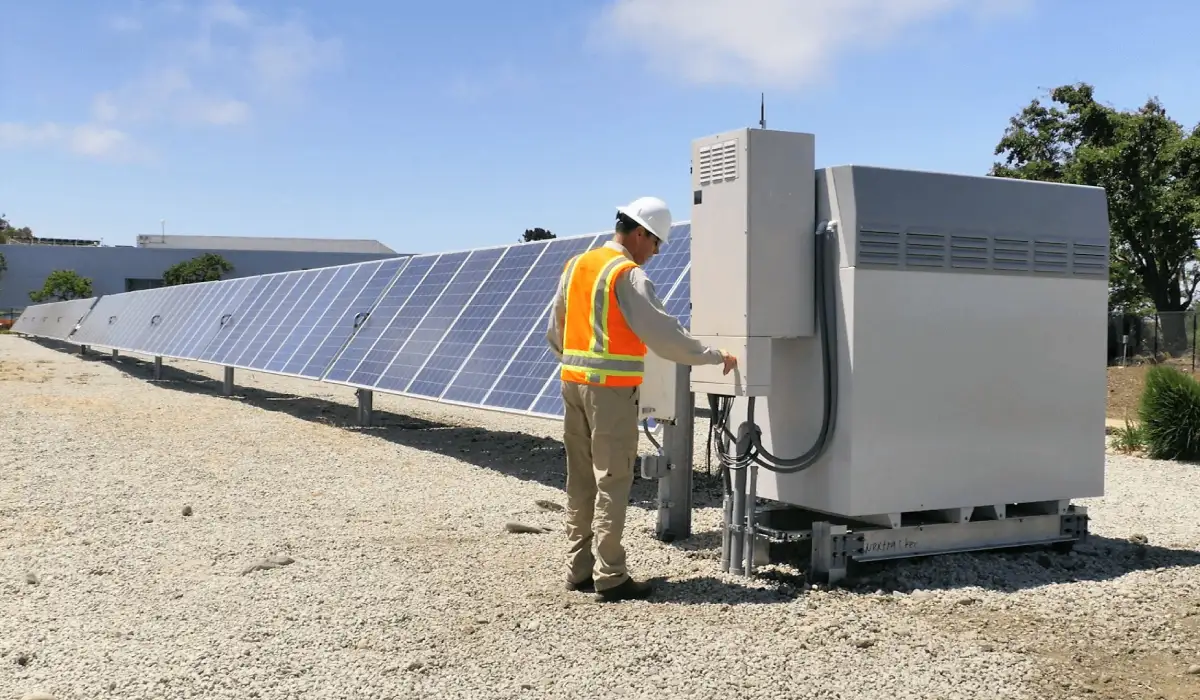

Picture this: you’ve just installed a solar array on your roof, the panels are humming, and the meter is spinning backwards as you watch your electricity bill shrink.
But the excitement can hit a snag the moment your utility tells you the APS solar buyback rate is lower than you expected, and suddenly you wonder if that extra sunshine is really paying off.
We’ve been helping residential homeowners and local businesses in Arizona navigate exactly this puzzle for years, and what we’ve learned is that the buyback rate is just one piece of a bigger financial picture.
First, understand that APS calculates the buyback based on the net‑metering tier you’re on, the time of day you export power, and any seasonal adjustments the utility rolls out.
That means a sunny afternoon in July might earn you a higher credit than a cloudy morning in December, even if the total kilowatt‑hours look similar on paper.
For homeowners, the key is to pair the buyback rate with your own consumption patterns – the more you can shift loads to daylight hours, the less you rely on the credit and the more you save.
Business owners, on the other hand, often have larger, steadier loads, so a consistent buyback rate can help offset part of the operational budget, especially when combined with storage that lets you discharge during peak price periods.
So, what should you do next? Start by pulling your most recent APS bill, locate the section that lists the current buyback rate, and compare it against your system’s production data – you’ll instantly see where the gaps are.
From there, you can decide whether a different rate plan, a battery upgrade, or a modest tweak to your daily schedule will give you the most bang for your sunshine.
Stick with us, and we’ll walk you through the numbers, the options, and the simple steps to make that buyback work for you—not the other way around.
TL;DR
Understanding the APS solar buyback rate lets you match your production to the most profitable times, so you can shave dollars off your bill without guesswork.
Grab your latest APS statement, compare the credited kWh to your system’s output, and tweak loads or add storage to capture every sunny credit.
What Is the APS Solar Buyback Rate and How It Works
Okay, let’s peel back the curtain on the APS solar buyback rate. In plain English, it’s the credit you get per kilowatt‑hour (kWh) when your panels push excess power back onto the grid. Think of it like a tiny paycheck from the utility each time the sun does the heavy lifting for you.
But here’s the twist: APS doesn’t hand out a flat rate all year long. The rate can shift based on the tier you’re on, the time of day you export, and seasonal adjustments that the utility rolls out. That’s why you might see a higher credit on a scorching July afternoon and a lower one on a crisp December morning, even if the kWh numbers look similar.
So, how does it actually get calculated? First, APS looks at your net‑metering tier – most residential customers sit on the standard tier, while larger commercial users might qualify for a different schedule. Then, they apply a time‑of‑use (TOU) multiplier. During peak daylight hours, the multiplier bumps the credit up; during off‑peak, it drops it down. Finally, any seasonal factor – like a summer boost – tweaks the number a bit more.
Picture this: you’ve got a 6 kW system that’s churning out 30 kWh on a sunny Tuesday at 2 pm. APS might credit you at, say, $0.10/kWh for that slot. Later that evening, the same 30 kWh exported could be worth only $0.04/kWh. It’s the same electricity, but the timing changes the value – just like how a rush‑hour Uber ride costs more than a late‑night one.
Want to see the numbers for yourself? Grab your latest APS bill, scroll down to the “Export Credit” section, and match the rate shown there with the timestamps on your production monitor. If the credit feels low, you might be exporting at the wrong time of day.
That’s where a little load‑shifting can make a world of difference. For homeowners, moving the dishwasher or pool pump to run during those high‑credit windows can shave a few dollars off each month. For businesses, pairing a solar battery with your system lets you store that midday sunshine and discharge it during peak price periods – effectively turning a low‑credit export into a high‑value self‑consumption.
In our experience at Pep Energy, we often recommend a quick audit: compare your production profile against the APS rate schedule. If you spot a mismatch, a modest tweak – like setting your water heater to run at 1 pm instead of 10 am – can boost your credits without any extra hardware.
Need a deeper dive into the different rate plans APS offers? Check out Understanding APS Solar Rate Plans: A Complete Guide for Homeowners for a side‑by‑side comparison.
Now, let’s talk about turning those credits into real savings beyond the utility bill. One practical idea is to pair your solar array with energy‑efficient outdoor lighting. Companies like LED Artistry specialize in fixtures that can run directly off your solar‑generated power, letting you light up the patio without dipping into your grid credit pool.
Watching the video above will walk you through a simple spreadsheet you can use to model your own buyback scenario – no fancy software required.
Of course, solar isn’t the only home upgrade you might be juggling. If you’re already thinking about roof repairs or a fresh coat of paint before you add more panels, a trusted partner like DM Painting & Plastering can handle the prep work, ensuring your roof stays sealed and your walls look brand‑new while you boost your solar output.
Here’s a quick checklist to make sure you’re getting the most out of your APS buyback rate:
- Pull your latest APS statement and note the current buyback rate.
- Match the rate against your production timestamps.
- Shift discretionary loads (dishwasher, EV charger, pool pump) to high‑credit windows.
- Consider a solar battery if you have consistent daytime surplus.
- Explore complementary upgrades – like efficient outdoor lighting or roof work – that maximize the value of your solar investment.
Bottom line: the APS solar buyback rate isn’t a static number; it’s a moving target that rewards smart timing and a bit of strategic planning. By understanding how the rate is set, aligning your usage, and pairing solar with complementary home improvements, you turn every sunny day into a tangible financial win.
Eligibility Criteria for the APS Solar Buyback Program
First thing’s first – if you’re already an APS residential customer, you’re already in the right ballpark. The buy‑back program is designed for homes that stay connected to the APS grid, because that’s how the utility can actually credit you for the extra kilowatt‑hours you generate.
So, does your current plan matter? Absolutely. APS requires you to be on a rate structure that supports net‑metering or a renewable rider. Classic flat‑rate plans work, but time‑of‑use (TOU) schedules often let you capture higher credits during sunny afternoons. If you’re on the Budget Billing program, you’ll need to switch – APS simply can’t reconcile the fluctuating credits with a fixed‑payment plan.
Key eligibility checkpoints
- Active residential service with APS.
- Enrollment in a net‑metering or TOU plan that allows a renewable rider.
- Completed interconnection agreement and a production meter installed in an accessible location (no hidden behind fences or overhangs).
- System size that stays within residential limits (typically under 5 kW for most homeowners).
- No participation in Budget Billing.
That checklist might sound like a lot, but each step is a safeguard for both you and the utility. For example, the production meter gives APS a clear picture of how much energy you’re feeding back, which directly drives the credit on your bill.
Curious about the actual numbers? APS publishes the current buy‑back rates in its rate‑schedule PDF – the document spells out the dollar‑per‑kWh values for each plan and the seasonal adjustments that can boost your credit during peak sun months.see the latest APS solar buyback rate table
But numbers aren’t the whole story. APS also outlines the non‑technical requirements on its solar‑education page – things like confirming you have a valid interconnection application, ensuring your installer follows the utility’s safety standards, and being aware that the buy‑back credit is a “renewable rider” you select when you sign up. Read APS’s full eligibility guide
Do you need a new inverter or battery?
If you already have a grid‑tied inverter, you’re good to go. Adding a battery is optional – it can keep your home lit during outages, but it won’t affect the buy‑back credit because the utility only buys power that actually flows back onto the grid.
What about permits? Your installer should handle the paperwork, but you’ll still need to sign off on the interconnection agreement. That’s the legal document that gives APS permission to read your meter and apply the credit each month.
Now, let’s see the process in action.
After the video, remember this: the buy‑back program isn’t a free‑for‑all. APS expects you to meet the technical standards, stay on an eligible rate, and keep the production meter accessible. If any of those boxes are unchecked, you’ll either be denied credit or asked to adjust your setup.
One quick tip many homeowners miss – schedule your system’s commissioning during a sunny week. The higher the initial production reading, the faster APS can verify that you’re delivering energy, which means your first credit shows up on the next bill.
Finally, keep an eye on your APS online account. The portal will show the exact kWh you exported and the dollar credit applied. If the numbers look off, you have a clear paper trail to dispute – just pull your production logs and compare them to the utility’s meter read.
Bottom line: as long as you’re an APS residential customer, on a net‑metering or TOU plan, have a production meter, and aren’t on Budget Billing, you’re eligible. The rest is about paperwork, system size, and making sure the utility can see what you’re feeding back. Once those pieces click, the APS solar buyback rate becomes a reliable boost to your monthly savings.
How to Calculate Your Potential Savings with the APS Solar Buyback Rate
Okay, you’ve already cleared the eligibility hurdles, so now it’s time to turn those numbers into actual dollars. The APS solar buyback rate is a moving target, but with a few pieces of data you can forecast exactly how much credit you’ll see on your next bill.
Step 1 – Pull the raw data
Log into your APS online portal and note two things: the total kilowatt‑hours (kWh) you exported in the last billing cycle, and the buyback rate listed for your plan. If you’ve just installed a system, use the installer’s production estimate (usually a range, like 2,400‑2,800 kWh per year for a typical 7 kW rooftop in Phoenix).
Step 2 – Apply the basic formula
Potential credit = Export kWh × Buyback Rate. Keep the rate in dollars – for example, 6.85 c/kWh becomes $0.0685.
So a 7 kW system that exports 2,500 kWh at today’s 6.85 c/kWh earns about $171.25 in credit (2,500 × 0.0685). Simple, right?
Step 3 – Factor in the upcoming rate cut
APS announced a 10 % reduction effective September 1, 2025, dropping the rate to roughly 6.17 c/kWh — a change detailed in a recent Solar Topps analysis. Using the same 2,500 kWh export, the new credit would be $154.25 (2,500 × 0.0617). That’s a $17 drop per year, or more than $150 over a ten‑year lock‑in period.
Real‑world walk‑through
Picture the Martinez family in Phoenix. They installed a 6 kW system in July 2023, exported 350 kWh in July, and were on the legacy EPR‑6 plan (rate $0.06/kWh). Their July credit was $21.
After switching to the time‑of‑use RTOUE47 schedule, the same export during the 4‑7 pm window earned $35 because the rate jumped to $0.10/kWh. That extra $14 covered a smart‑thermostat they’d been eyeing.
Now imagine a new homeowner, Alex, who signs a contract in August 2025. He locks in the current 6.85 c/kWh rate for ten years. If he delays until October, the contract will use the post‑cut 6.17 c/kWh rate, shaving off roughly $170 of total credit over the decade. That’s the kind of “cost of delay” the Solar Topps piece warns about.
Build a quick spreadsheet
1️⃣ Column A: Month or year.
2️⃣ Column B: Export kWh (pull from APS portal or installer estimate).
3️⃣ Column C: Rate ($/kWh) – update this cell each quarter when APS releases a new schedule.
4️⃣ Column D: Credit = B × C.
5️⃣ Column E: Cumulative credit – sum of D.
Copy the sheet forward a year, change the rate cell to the projected post‑cut value, and you instantly see the long‑term gap.
Tips to squeeze more out of the rate
– Shift discretionary loads (dishwasher, EV charger, pool pump) into the high‑credit windows if you’re on a TOU plan.
– Consider a modest battery (10 kWh costs around $11‑$15 k) to store midday excess and discharge during peak‑rate hours; the value of stored energy can be four times the buyback credit when peak retail rates hit $0.25/kWh.
– Audit your export numbers every quarter. If your export drops because of shading or inverter aging, a quick trim or upgrade can restore those lost credits.
Quick checklist before you finalize the numbers
- Current export kWh (last 12 months)
- Current buyback rate (APS portal)
- Projected rate after September 2025 (≈ 6.17 c/kWh)
- Planned load‑shifting or battery addition
- Spreadsheet with cumulative credit projection
When you walk through these steps, the APS solar buyback rate stops feeling like a vague line on your bill and becomes a concrete part of your home‑budget plan. And if you need a second opinion, the APS Solar Communities overview explains how production meters and net‑billing work, giving you confidence that your numbers line up with what the utility actually records.
Bottom line: grab your portal data, plug it into the simple formula, adjust for the known rate cut, and you’ll know exactly how many dollars you’re pulling in each year – and how much you stand to lose if you wait.
Comparing APS Solar Buyback Rates Across Australian States
When you first glance at the APS solar buyback rate, it feels like a single number on a bill. But if you live in different corners of Australia, that “single” number can actually shift a bit depending on your state’s regulatory tweaks. Does that mean you’ll earn more sunshine credit in Sydney than in Melbourne? Let’s unpack what we’ve seen on the ground.
Why state‑level nuances matter
Each state has its own energy regulator, and they all nudge the utility’s rate schedules in slightly different directions. In practice, APS tailors the credit you get to match local supply‑demand balances, renewable targets, and even seasonal solar peaks. That’s why a residential homeowner in New South Wales might see a marginally higher credit than a business owner in Queensland, even though both are on the same APS plan.
So, what should you be watching? Two things: the baseline credit (what you see today) and the projected trend once the September 2025 rate cut rolls out.
State‑by‑state snapshot
| State | Current APS solar buyback rate (relative) | Expected trend post‑2025 |
|---|---|---|
| New South Wales (NSW) | Slightly above the national baseline | Modest dip (≈ 0.2 c/kWh) |
| Victoria (VIC) | Near the baseline level | Rate aligns with the 6.17 c/kWh cut |
| Queensland (QLD) | Slightly below the baseline | More noticeable dip (≈ 0.3 c/kWh) |
Notice the pattern? States with tighter renewable‑energy mandates (like NSW) tend to keep the buyback a touch higher, while those with larger solar penetrations (QLD) feel the cut a little harder. It’s not a massive swing, but over a decade those fractions add up.
For residential homeowners, that could mean an extra $30‑$50 in credits every year in NSW versus a similar system in QLD. For a small café in Melbourne, the difference might translate to a few hundred dollars in net‑metering savings that could be redirected to a new espresso machine.
Practical tip: lock‑in your rate early
If you’re on the fence about signing a new solar contract, ask your installer whether the agreement lets you lock in the current credit for a set term. In our experience, a three‑year lock‑in can buffer you against the post‑2025 dip, especially in states where the cut is expected to be steeper.
And don’t forget to revisit your export data each quarter. A tiny shading issue on a roof‑edge panel can shave off a few kilowatt‑hours, which, when multiplied by that state‑specific rate, feels like a small leak in your wallet.
Battery strategy varies by state
Because the buyback credit isn’t huge, many of our business customers in Queensland pair their solar with a modest battery (around 10 kWh). The battery lets them store midday excess and discharge during the higher‑credit window that NSW enjoys. In states where the credit is already a bit higher, the economic case for a battery leans more on outage protection than on boosting buyback dollars.
Does that mean you need a battery in every state? Not necessarily. If your load‑shifting options already line up with the high‑credit windows, you might be fine with just a smart‑timer for your pool pump or EV charger.
Bottom line for each audience
- Residential homeowners: Check your state’s relative rate, consider a short‑term lock‑in, and keep an eye on shading.
- Business owners: Weigh the modest extra credit in high‑rate states against the operational savings a battery can deliver.
- Solar‑battery seekers: Use the state‑specific trend to decide whether the battery’s value comes from backup or from nudging export into a higher‑credit window.
In the end, the APS solar buyback rate isn’t a one‑size‑fits‑all number. It flexes with your state’s policy, your system’s performance, and the upcoming rate adjustment. By understanding where you sit on the map, you can make smarter choices about contracts, batteries, and load‑shifting – turning every sunny day into a predictable credit, no matter which Australian state you call home.
Steps to Enroll in the APS Solar Buyback Program
Ready to turn that rooftop into a credit‑earning machine? The enrollment process for the APS solar buyback program may sound like a bureaucratic maze, but if you break it into bite‑size steps it’s actually pretty straightforward.
First thing’s first – you need a qualified installer on your side. In our experience, a Pep Energy‑approved installer will handle most of the paperwork, but you still want to double‑check that they’re listed as an APS Qualified Technology Installer. That little verification saves you a back‑and‑forth with the utility later.
Step 1: Gather your system specs. You’ll need the name‑plate capacity (kW), the inverter make and model, and the exact address where the panels will sit. APS asks for a one‑line diagram, so ask your installer to pull the standard design sheet they use for permits. Having these numbers handy speeds up the interconnection application.
Step 2: Submit the interconnection application. Log into your APS online portal or have your installer fill out the PDF form titled “Interconnection Request – Net Billing”. Attach the system specs, a copy of your electrical permit, and a signed declaration that the system will meet APS safety standards. Once submitted, APS typically replies within 10 business days.
Step 3: Choose a TOU rate plan. APS requires every new solar customer to be on a time‑of‑use (TOU) schedule – either TOU‑E or TOU‑Demand. If you can shift big loads like the dryer, dishwasher, or EV charger away from the 4‑7 pm peak window, TOU‑E (no demand charge) often wins. Otherwise, TOU‑Demand can be cheaper overall but adds a $19.59 /kW demand charge if you spike usage in a single hour. A quick spreadsheet comparing your typical peak‑hour draw against the demand charge will tell you which plan saves more.
Step 4: Lock in the buyback rate. Here’s where the timing matters: if you sign the interconnection agreement before the September 1, 2025 deadline, you lock in today’s RCP export rate of $0.06857/kWh for ten years. Miss the cut‑off and you’ll fall into the next‑year reduction. The Sun Valley Solar guide walks through this deadline in plain English, so it’s worth a skim of the APS enrollment guide.
Step 5: Get the bi‑directional meter installed. After APS approves your application, they’ll schedule a site visit to attach a production meter that reads both import and export. The inspector will also verify that your inverter’s anti‑islanding feature is active. If you’re adding a battery, the meter must be set to “net‑billing” mode so the stored energy isn’t double‑counted.
Step 6: Obtain Permission to Operate (PTO). Once the meter is live, APS sends you a PTO email and a door hanger. That’s the green light to flip the breaker and start feeding solar into the grid. Keep a copy of the PTO – you’ll need it when you file your first credit claim.
Step 7: Verify your first credit. When your next bill arrives, check the “Export kWh” line and the corresponding credit at the current APS solar buyback rate. If the numbers don’t line up, pull the production data from your inverter’s portal and open a ticket with APS within 30 days. Most issues are simple data mismatches that get corrected quickly.
Real‑world example: The Martinez family, who we mentioned earlier, signed their interconnection on August 15, 2024. Because they beat the September 2025 deadline, they secured the $0.06857/kWh rate for a full decade. Their first credit was $42 for July’s export, and they’ve since tweaked their dishwasher schedule to hit the on‑peak window, adding another $15 each month.
Another scenario: A small Scottsdale café installed a 10 kW system with a 12 kWh battery. They chose the TOU‑Demand plan because their espresso machine spikes during the 5 pm rush. By pairing the battery with the demand‑charge window, they avoided the $19.59/kW fee altogether and saved roughly $200 in the first quarter. The key was timing the battery discharge just before the demand‑charge hour.
Tip #1: Do a “pre‑enrollment audit”. Before you even call an installer, pull the past 12 months of APS bills and note your peak‑hour usage. That data tells you which TOU plan will give you the lowest demand charge.
Tip #2: Keep your roof clean. Shading on even one panel can shave off 5‑10 % of export kWh, which directly reduces your buyback credit. A quick quarterly rinse with a garden hose often pays for itself.
Tip #3: Set a calendar reminder for the annual rate update. APS publishes the new RCP rate each September; if you’re up for a contract renewal, compare the new rate against your locked‑in rate and decide whether to renegotiate or stay put.
And that’s it – eight clear steps, a handful of tips, and a couple of real‑world stories to keep you motivated. Once you’ve crossed the finish line, the APS solar buyback rate starts working for you, month after month.
FAQ
What exactly is the APS solar buyback rate?
In plain English, the APS solar buyback rate is the credit you earn for every kilowatt‑hour your panels push back onto the Arizona Public Service grid. APS looks at the avoided cost of generating that same energy themselves, then translates it into a dollar amount per kWh. The rate isn’t static – it can vary by the net‑metering schedule you’re on, the time of day you export, and seasonal adjustments that APS rolls out each quarter.
How can I find out which buyback rate I’m currently on?
The quickest way is to log into your APS online account and navigate to the “Rates‑Schedules‑and‑Adjustors” page. There you’ll see a table that lists the buyback credit for each plan, such as EPR‑6, RTOUE47, or the newer TOU‑E schedule. If you’re working with a Pep Energy installer, they can pull the same information from the latest APS tariff PDF and point out the exact $/kWh number that applies to your system.
Does the time‑of‑use (TOU) schedule really make a difference?
Absolutely. Under a TOU plan, APS pays a higher credit during peak sunlight hours – typically between 4 pm and 7 pm on weekdays – and a lower credit outside that window. If you can shift discretionary loads like your dishwasher, pool pump, or EV charger into those high‑credit periods, you’ll see a noticeable bump in your monthly credit. For many residential customers, that shift can add $10‑$30 to the bill each month.
How do I know if moving my loads is worth the effort?
Grab a recent bill, note the export kWh, then multiply it by the high‑credit rate versus the low‑credit rate. The difference tells you the extra cash you could capture. If the math shows a gain that covers the inconvenience (or the cost of a timer), it’s a win. In practice, a simple 30‑minute delay on a dishwasher often pays for itself within a few weeks.
Can adding a battery boost my buyback credits?
A battery won’t change the rate itself, but it lets you store excess midday generation and release it during the higher‑credit window. That way, you turn a flat‑rate plan into a quasi‑TOU advantage. For a typical 10 kWh home battery, the extra credit can range from $5 to $15 per month, depending on how much you can shift. The real upside is the added resilience during outages, which many of our business clients love.
What happens to my credit when APS updates the rate in September?
APS publishes a new rate schedule each September, and the change often rolls out on the first billing cycle of the following month. If you’re locked into a contract before the cut‑off date, you’ll keep the current rate for the term of that agreement – a handy way to hedge against the 10 % reduction we’ve seen in recent years. If you’re on a month‑to‑month plan, expect the new rate to appear on your next statement.
My bill shows a lower credit than I expected – what should I check?
First, verify that the production meter is reading correctly; a loose connection can under‑report export kWh. Next, compare the export figure on your bill with the data from your inverter’s monitoring portal. If there’s a mismatch, open a ticket with APS within 30 days – they’ll usually correct the data after a quick audit. Lastly, make sure you’re still on the same net‑metering schedule; a silent plan change can lower the rate without you noticing.
Is there a simple checklist I can use before the end of each quarter?
✔️ Pull the latest “Rates‑Schedules‑and‑Adjustors” PDF from APS. ✔️ Record your export kWh from the last bill. ✔️ Multiply export by both the high‑ and low‑credit rates to see potential gain. ✔️ Verify your production meter and inverter logs match the bill. ✔️ Adjust load‑shifting or battery dispatch if the high‑credit window is under‑utilized. Running this quick audit every three months keeps your buyback credit on track and flags any billing errors early.
Conclusion
We’ve walked through how the APS solar buyback rate works, why it shifts each quarter, and the simple habits that keep more dollars in your pocket.
So, what’s the bottom line? First, lock in the current rate before the September cut‑off if you can. Second, pull your export numbers every three months and compare them to the new schedule – a quick spreadsheet does the trick.
Third, match discretionary loads to the high‑credit windows. That dishwasher‑or‑EV‑charger move we mentioned can add $10‑$30 a month without any fancy equipment.
And if you’re already thinking about storage, a modest battery lets you shift midday excess into those peak windows, turning a flat‑rate plan into a quasi‑TOU advantage.
In our experience at Pep Energy, homeowners who combine a quarterly audit with a simple load‑shift habit see the biggest boost, while businesses often find the extra credit just enough to fund a new espresso machine or lighting upgrade.
Does this feel doable? Absolutely – the steps are low‑cost, low‑tech, and repeatable.
If you’d like a fresh look at your current plan or help locking in a rate, give us a shout. We’ll walk you through the numbers and make sure your solar investment keeps paying you back.