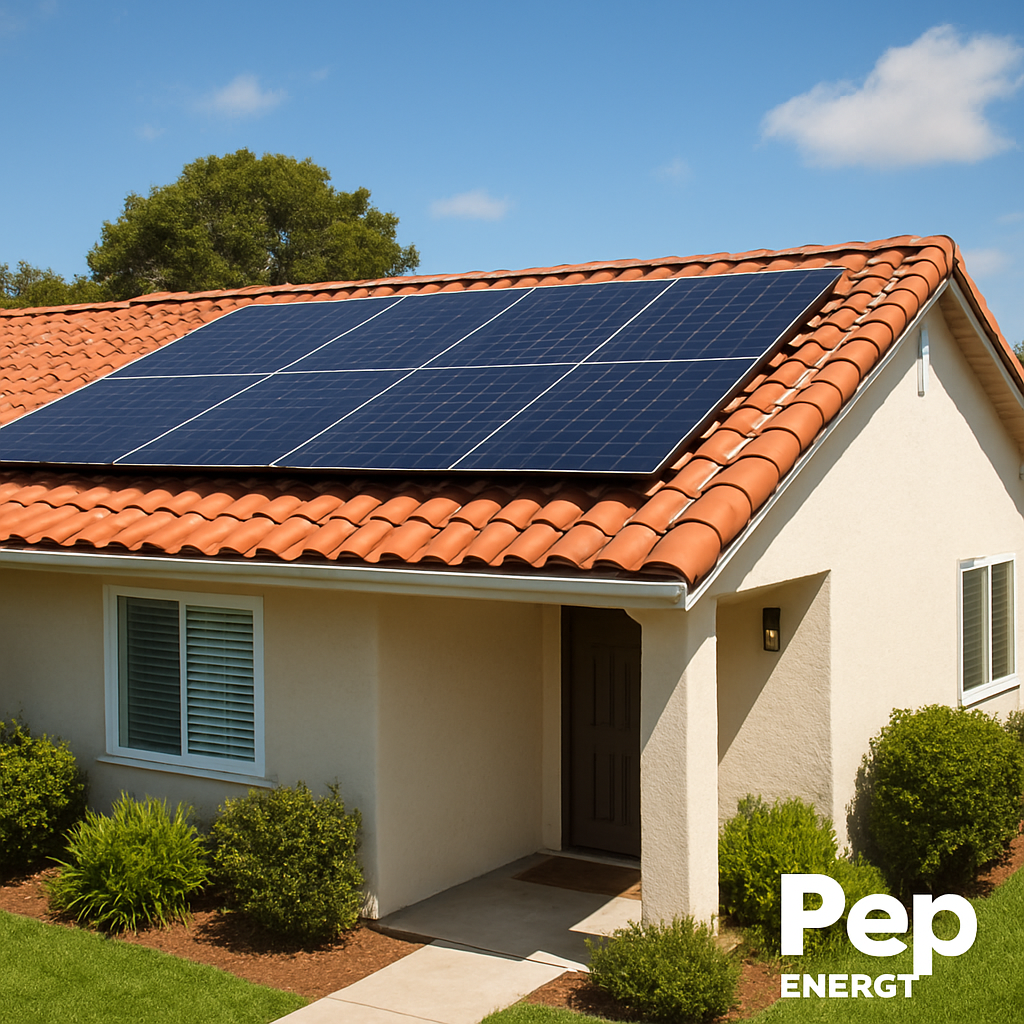
Picture this: you’re standing on your roof, the sun beating down on those classic terracotta tiles, and you start wondering if those shiny solar panels could sit up there without ruining the look.
It’s a common moment for many homeowners – the excitement of clean energy collides with the fear of compromising that beautiful tile roof you’ve invested in. And honestly, you’re not alone. We’ve heard countless questions about weight, flashing, and aesthetics from folks just like you.
Here’s the good news: installing solar panels on a tile roof is totally doable, but it does require a bit of know‑how. From choosing the right mounting system to making sure the tiles stay watertight, there are a few key steps that can turn a daunting project into a smooth upgrade.
Think about it this way: the tiles act like a protective skin for your home, so you need a mounting solution that respects that skin rather than puncturing it willy‑nilly.
What about the extra weight? Modern solar panels are lighter than the old bulky models, and most tile roofs are built to handle a decent load. Still, a quick structural assessment – something we always recommend – can give you peace of mind and prevent surprises down the line.
And then there’s the visual side. If you love the look of those red tiles, you can opt for low‑profile panels or arrange them in a way that blends with the rooflines. Many of our customers tell us that once the system is up and humming, the panels become a subtle, even attractive, part of the home’s silhouette.
So, what should you do next? Start by checking your roof’s condition, gather a few quotes from installers who specialize in tile roofs, and ask about their mounting hardware. From there, you’ll have a clear picture of costs, timeline, and the exact steps needed to bring solar power to your tile‑capped sanctuary.
Ready to see how solar panels on a tile roof can fit your lifestyle and boost your energy independence? Let’s dive in and explore the details.
TL;DR
Wondering if solar panels on tile roof can look good and still save you money? Yes—pick the right mounting hardware and verify load limits.
Start with a roof inspection, get quotes from installers experienced with tiles, and design a low‑profile layout so your home stays stylish while going green today.
Step 1: Assess Roof Compatibility
First thing’s first – before you even think about where the panels will sit, you need to know if your roof can handle them. It sounds obvious, but most homeowners skip the quick check and end up with costly surprises later.
Take a step back and look at your tiles. Are they intact, or are there cracked or missing pieces? A solid, unbroken roof is the foundation for a safe solar install. If you spot any damage, get it repaired now; trying to mount panels over a compromised area is a recipe for leaks.
Check the structural load
Modern photovoltaic modules weigh about 2‑3 kg per square foot, which is roughly the same as a handful of shingles. Most residential tile roofs are engineered to support at least 20 lb/ft² of extra load, but you’ll want to verify your specific construction.
Grab the original building plans if you have them, or ask your local building department for the roof’s design load. If you’re unsure, a licensed structural engineer can perform a quick roof‑deck assessment – it’s a small investment that can save you from a roof‑collapse nightmare.
Does the roof pitch matter? Absolutely. Steeper pitches make it easier to keep water off the mounting hardware, but they also require longer rails or angled brackets. Flatter roofs may need additional flashing to prevent ponding. Either way, the pitch will dictate the mounting style you choose.
Identify the tile type
Terracotta, concrete, or synthetic tiles each have their own quirks. Terracotta is lighter but more brittle; concrete is heavier but tougher. Some tiles are “interlocking,” which means you can’t simply lift them to slip a bracket underneath – you’ll need a specialized “tile hook” system that grips the edge without breaking the tile.
When we work with residential homeowners, we often start by walking the roof with a small flashlight, feeling each tile for give. If a tile feels soft or spongy, that’s a red flag – it could mean water has seeped in, weakening the substrate.
Weather and wind considerations
Living in a windy region? Check the local wind‑speed maps. In high‑wind zones, you’ll need to reinforce the mounting brackets and possibly add extra fasteners. This is where a professional solar installer’s experience pays off – they’ll know the exact hardware that meets local code.
And don’t forget about shade. Even a partially shaded tile can cause hot‑spots on a panel, reducing efficiency. Use a simple sun‑path app on your phone to track how the sun moves across your roof throughout the year.
So, what’s the takeaway? A quick visual inspection, a load‑capacity check, and an understanding of your tile’s material go a long way toward confirming compatibility.
Now that you’ve got the basics down, it’s time to bring in a qualified installer who knows how to work with tile roofs. They’ll confirm your findings, suggest the best mounting hardware, and ensure everything stays watertight.
Remember, this isn’t just about getting panels on a roof – it’s about preserving the integrity and beauty of that tile roof you love.
Once you’ve cleared these checks, you can move confidently to the next step: choosing the right mounting system.
Step 2: Choose the Right Solar Panels
Okay, you’ve checked that your terracotta tiles are in good shape, and the roof can take the load. Now the fun part begins: picking the panels that will actually sit on those tiles and turn sunshine into savings.
Panel type matters more than you think
Most homeowners assume any solar panel will do, but the chemistry inside the cell changes how it behaves on a hot tile roof. Monocrystalline panels pack the highest efficiency into a smaller footprint – perfect if you want a low‑profile look that doesn’t obscure the roof’s character.
Polycrystalline (the “blue” panels you sometimes see) are a bit cheaper, but they’re bulkier and usually a shade less efficient. If you’re juggling a limited roof area, the extra wattage per square foot from monocrystalline can mean fewer panels and a cleaner line.
Heat, colour, and your tile roof
It’s easy to hear salespeople claim that black panels will roast your attic, especially on a dark tile surface. The truth? The difference is modest. A black‑backed panel might run a few degrees hotter than a silver‑backed one, shaving off 1‑2% of output according to a real‑world forum discussion. In most residential scenarios the shade they provide actually helps keep the roof cooler than it would be uncovered.
What really matters is proper ventilation under the panels and good insulation in your ceiling cavity. So, don’t get hung up on colour – focus on panel efficiency and how it fits your roof’s layout.
Size, layout, and tile‑friendly mounting
Tile roofs love a light touch. Heavy panels add weight, and you don’t want to overload the roof structure. A typical 60‑cell panel weighs around 40 lb, so a 5‑kW system can tip the scales at 600 lb. That’s why many of our residential customers opt for panels that are both high‑efficiency and relatively lightweight. The DECRA blog notes that lightweight roofing materials pair best with solar – the same principle applies to panels: the lighter, the less you’ll need extra structural reinforcement.
When you map out the array, aim for rows that follow the roof’s pitch and avoid crossing the seams between tiles. A staggered layout reduces the number of mounting points that need to pierce the tile, preserving the waterproof membrane.
Warranty, certifications, and local incentives
Don’t overlook the fine print. Look for a product warranty of at least 25 years and a performance guarantee that the panel will still produce 80% of its nameplate rating after 25 years. Those numbers give you peace of mind if you plan to stay in the house for a decade or more.
Make sure the panels are UL‑listed and meet IEC 61215/61730 standards – that’s the industry’s safety checklist. If you qualify for state or utility rebates, the panel manufacturer’s certification often matters for the paperwork.
Quick checklist before you sign
- Choose monocrystalline for the highest efficiency per square foot.
- Confirm the panel’s weight is under 45 lb per unit.
- Ask the installer about ventilation gaps behind the panels.
- Verify a 25‑year product warranty and performance guarantee.
- Check that the panels are UL‑listed and IEC‑certified.
Once you’ve ticked those boxes, you’ll have a panel package that not only looks good on your tile roof but also delivers the energy you need without unnecessary heat or structural headaches. Ready to move forward? Grab a few quotes, compare the specs, and let’s get those tiles working for you.
Step 3: Install the Mounting System
Alright, you’ve already cleared the roof and picked the right panels – now it’s time to get those rails in place. This is the part where the rubber meets the road, or rather, where the aluminum meets the terracotta. If you’re feeling a little jittery, that’s normal; the mounting system is the backbone of your solar array, and a solid install protects both your roof and your investment.
Gather your kit and double‑check the inventory
Most tile‑roof mounting kits, like the one described by Wattuneed, come with rails, clamps, high‑strength screws, and a handful of brackets that adapt to the thickness of your panel frames. Before you even lift a drill, pull the kit apart on the ground and make sure you have:
- 40 × 40 mm aluminium rails (enough length for each row)
- End clamps and middle clamps matching your panel layout
- M8/M10 bolts, nuts, and a torque‑wrench
- Stainless‑steel screws with rubber washers for waterproofing
Missing a piece? Call your supplier now – it’s way cheaper than stopping mid‑install.
Mark the attachment points
Grab a chalk line and snap a straight line across the roof where each rail will sit. The goal is a level, unobstructed track that follows the roof’s pitch. If you’re using a non‑penetrating (ballasted) system, the line will guide where the concrete blocks go. For a penetrating system, the line shows where you’ll drill through the tile into the deck.
Tip: measure the distance between tiles and mark the center of each tile to avoid cutting into the most fragile parts. A quick tap with a rubber mallet will let you feel if a tile is hollow or solid – you want the solid spots for any screws.
Install the rails
Start with the first rail at the lowest point of the slope. Align it with your chalk line, then use a level to make sure it’s perfectly horizontal across its length. For penetrating mounts, pre‑drill a small pilot hole through the tile (use a 3 mm bit) and then drive the stainless‑steel screw into the roof deck, sealing around it with a silicone flash‑seal. Tighten the bolt to the manufacturer’s torque spec – usually around 8 Nm for 10 mm screws.
If you’re opting for a ballasted approach, simply place the rail on the tiles and slide the concrete block underneath. The block’s weight, combined with the panels, will keep the rail from shifting. Make sure the block sits on a flat tile, not a ridge, to distribute pressure evenly.
Repeat this process for each rail, checking alignment as you go. A common mistake is letting a rail drift a few centimeters off‑track; that can cause panel gaps and wind‑uplift problems later.
Attach the clamps and secure the panels
Once the rails are locked in, snap the end clamps onto the outermost rails. Then add middle clamps every 600‑800 mm – the exact spacing depends on your panel’s frame thickness (the Wattuneed kit offers 28‑50 mm options). Tighten each clamp just enough to hold the panel without crushing the frame.
Now lift a panel (ask a buddy for help – they’re heavy) and rest it on the rail. Slide the clamp over the frame, then bolt it down. You’ll hear a satisfying “click” when it’s seated correctly. Repeat for every panel in the row, then move to the next row, ensuring the staggered layout we talked about earlier stays consistent.
Final safety and quality check
Walk the entire roof and give each fastener a firm wiggle – nothing should move. Verify that all silicone seals are smooth and fully encircle the screw heads. Take a step back and look at the array from ground level; it should appear as a clean, straight line of panels, not a jagged puzzle.
Don’t forget to snap a few photos for your records and for any warranty paperwork. Many manufacturers require a “as‑built” photo set before they’ll honor a performance guarantee.
And that’s it – you’ve just installed the mounting system for solar panels on a tile roof. If you need a broader view of the whole process, check out our step‑by‑step solar panel installation guide for additional context on wiring and commissioning.
Step 4: Wiring and Electrical Connections
Now the panels are perched on the tiles, the real magic happens behind the rails. Wiring is where sunshine turns into usable electricity, and if you get it right you’ll avoid headaches for years to come.
What you need before you start
Grab a checklist and keep it on the roof edge. You’ll need a set of MC4 connectors, a UV‑rated conduit, a pair of insulated screwdriver bits, a digital multimeter, and a small spool of THHN/THWN‑2 wire (typically 10 AWG for residential strings). If you’re working on a larger system, add a junction box rated for outdoor use.
Tip: label every wire with a waterproof marker the moment you cut it. It sounds simple, but a mislabeled wire can turn a quick hookup into a day‑long mystery.
Step‑by‑step wiring guide
1. Plan your string layout. Most tile‑roof installations use a series‑parallel design – two or three panels in series, then parallel strings tied back to the inverter. This keeps voltage under the inverter’s maximum while maximizing current flow. Sketch a quick diagram on your phone so you can reference it while you work.
2. Strip and crimp the MC4 connectors. Cut the wire to length (leave a few extra inches for slack), strip about 10 mm of insulation, and push the stripped end into the MC4 male or female housing. Use the crimp tool to secure it. Double‑check the polarity – the red side is always positive.
3. Run the conduit. Snap the UV‑protected conduit along the rail, securing it with zip‑ties every 12‑18 inches. Keep the conduit a few centimeters away from the tile surface to allow for thermal expansion and to prevent chafing.
4. Connect the strings. Starting at the lowest panel, join the positive lead to the next panel’s negative lead, creating a series string. When you reach the last panel in the string, terminate the ends in a combiner box (or directly into the inverter if the system is small). Use a torque wrench to tighten the MC4 lock nuts to the manufacturer’s spec – usually around 5 Nm.
5. Ground everything. Attach a grounding lug to each rail and run a dedicated ground wire back to the main grounding electrode (often a metal water pipe or a ground rod). A properly grounded system reduces the risk of stray voltage and meets most local electrical codes.
6. Perform a continuity test. Before you seal anything, power up a multimeter and verify that each series string reads the expected voltage (roughly 30‑40 V per panel for 12 V cells). If you see an open circuit, double‑check your MC4 connections.
Real‑world example
We recently helped a family in Phoenix install a 5‑kW system on a terracotta roof. Their roof had a slight ridge that forced us to split the array into two parallel strings of three panels each. By routing the conduit along the ridge and using a small junction box, we kept the wiring neat, and the system passed inspection with a measured 480 V open‑circuit voltage – right on target.
Another case involved a small boutique hotel with a mixed‑tile/metal roof. We ran a single 10 AWG feed from the rooftop combiner to a nearby inverter placed in the mechanical room. The key was using a waterproof conduit transition kit at the tile‑metal junction – it prevented water ingress and saved the hotel from a costly retrofit later.
Safety and code tips
- Always shut off the main breaker before you touch any live wire.
- Check local code for the required conduit fill – the NEC limits the number of wires per conduit.
- Seal every entry point with silicone caulk to keep moisture out.
- Document the final wiring diagram and keep a copy in your home’s utility folder.
Quick reference table
| Component | Tool/Option | Key Tip |
|---|---|---|
| MC4 connectors | Crimp tool, torque wrench | Torque to 5 Nm; verify polarity before crimping |
| Conduit | UV‑rated PVC, zip‑ties | Leave 2‑3 cm clearance from tiles; secure every foot |
| Grounding | Ground lug, bare‑copper wire | Connect to existing water‑pipe ground or install a ground rod |
Once everything is wired, sealed, and tested, you can flip the breaker back on and watch the inverter come to life. The lights on the display will flash green, and you’ll see the first kilowatt‑hours roll in – a satisfying proof that the sun is finally doing the heavy lifting for you.
So, what’s the next move? Take a photo of your completed wiring, file the test results, and schedule your final inspection. After that, sit back, enjoy the lower electricity bill, and maybe brag a little to the neighbor who’s still debating whether to go solar on their tile roof.
Step 5: Secure Panels and Seal Tile Roof
Alright, you’ve got the rails, the clamps, the wiring… now it’s time to make sure everything stays put when the next desert wind blows.
Double‑check your mounts
First thing: walk the rows and give each rail a gentle wiggle. If anything moves, tighten the bolts with a torque wrench – usually 8 Nm for the stainless‑steel screws we use on tile roofs. Remember, the tiles themselves can’t bear a lot of shear, so the rail has to be firmly anchored to the deck, not just resting on the tile surface.
Do you ever wonder why a few “loose” panels can cause a whole system to fail? A single shifting rail can let wind lift a panel, and that can rip the flashing or even crack a tile. Tighten, re‑check, then move on.
Seal every penetration
Every screw that goes through a tile needs a waterproof seal. We like to apply a bead of silicone caulk around the screw head, then cover it with a metal flashing washer.
Here’s a quick tip: use a silicone that stays flexible for at least 10 years – it won’t shrink and pull away as the roof expands and contracts. The Parker & Sons guide recommends a “double‑flashing” approach for clay tiles, which adds a second layer of metal under the silicone for extra peace of mind.
And don’t forget the corners where the rail meets the roof ridge. A small piece of flashing tucked under the ridge tile can make the difference between a dry roof and a slow leak that shows up months later.
Integrate the inset installation if you can
When the budget allows, consider an inset (or “comp‑out”) installation. Instead of bolting directly to the tiles, the installer removes a strip of tiles, lays down a plywood or composite shingle base, and then mounts the panels on that solid surface.
This method eliminates most of the penetration headaches and gives the panels a perfectly flat platform.
Sunhub points out that the inset approach “reduces stress on the tiles and prevents direct contact between the panels and the roofing material,” which translates to fewer cracks and a longer roof life according to their tile‑roof guide.
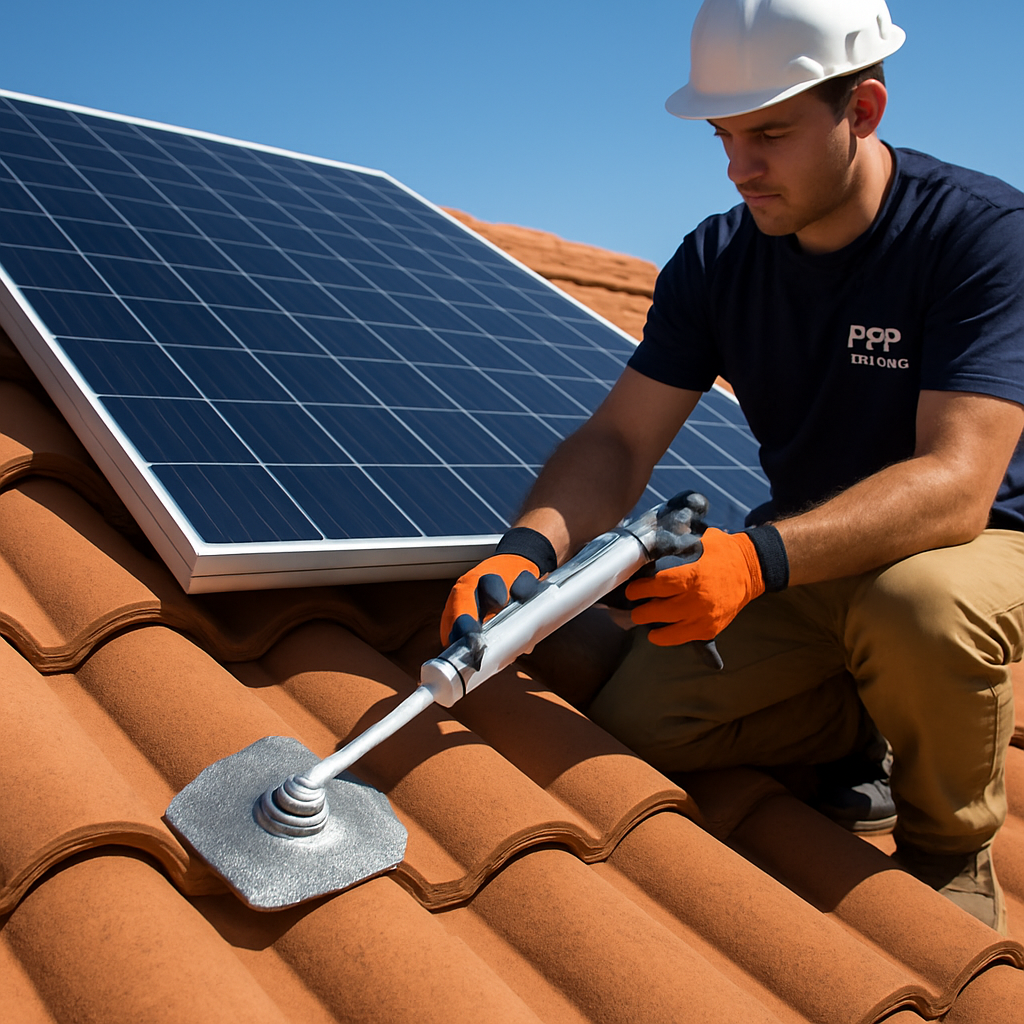
Final inspection checklist
Before you call it a day, run through this quick list:
- All rails tightened to spec (8 Nm for 10 mm screws).
- Every screw has silicone bead + metal washer.
- Flashing installed on ridge, valleys, and around any pipe penetrations.
- All conduit clamps are spaced no more than 12 inches apart and clear of tiles by at least 2 cm.
- Run a water‑spray test on the sealed areas – look for any drips.
- Take “as‑built” photos for your warranty packet.
If any water shows up, re‑apply silicone and retest. It’s easier to fix now than to chase a leak after the warranty expires.
Once everything passes, you can flip the breaker back on, watch the inverter flash green, and celebrate that your solar panels on tile roof are not just up, but securely fastened and watertight.
That’s it – you’ve turned a fragile tile roof into a sturdy, solar‑ready platform. Need a hand with the sealing step? Our team at Sean Whitmer can walk you through the exact products we trust for tile‑roof installations.
Step 6: Inspection, Testing, and Maintenance
Alright, you’ve gotten those panels perched on the tiles and the wires tucked away – now it’s time to make sure everything stays happy for years to come. Think of this step as the “check‑up” you give your car after the first few hundred miles. A quick look now saves you a costly leak or a dead inverter later.
Quick visual walk‑through
Grab a flashlight and take a slow stroll along each rail. Are any bolts loose? Do the silicone beads around the screws still look smooth, or have they cracked? A loose fastener is the easiest thing to tighten with a torque wrench (8 Nm is our sweet spot). If something feels wobbly, give it a gentle nudge – if it moves, tighten it.
While you’re at it, scan the flashing for gaps. Even a tiny hairline crack can let water sneak in during the next rainstorm. And don’t forget the ridge and valley flashings – those are the high‑traffic zones where water loves to collect.
Water‑spray test – the “no‑drip” rule
Grab a garden hose, set it to a steady spray, and run water over every sealed penetration. Watch the panels from the ground or from a ladder. Do you see any droplets forming? If you do, pause, dry the area, re‑apply a fresh bead of silicone, and test again. It’s a bit of a chore, but catching a drip now is way easier than tracking a leak months down the road.
Pro tip: do the spray test on a cool, overcast day. Hot water can expand the silicone and give you a false‑negative reading.
Electrical sanity check
Now that the roof is watertight, let’s make sure the electricity side is solid. With the system still disconnected from the grid, use a multimeter to verify each string’s open‑circuit voltage. For a typical 60‑cell panel you should see around 30‑40 V per panel; a 5‑kW array will read roughly 480 V total. If any string is low, double‑check the MC4 connections – a loose lock nut is the usual culprit.
After confirming voltage, turn the main breaker back on and watch the inverter’s display. Green lights, a steady readout, and no error codes mean you’ve passed the electrical test. If the inverter flashes an alarm, note the code and consult the manual – most issues are as simple as a reversed polarity or a grounding problem.
Cleaning – keep the panels crystal clear
Dirt, dust, and bird droppings act like a blanket, shaving off 5‑20% of your energy output. A quick rinse with a hose and a soft brush does the trick for most homes, but for stubborn grime follow a proper cleaning solar panels on a roof guide. Use lukewarm water, a mild biodegradable soap, and a microfiber cloth. Never spray high‑pressure water directly at the tiles – the force can loosen a screw or crack a tile.
Schedule a cleaning at least twice a year, or more often if you live near trees or in a dusty climate. Early‑morning or late‑afternoon cleaning is best; panels are cooler and you’ll avoid streaks.
Maintenance checklist – your monthly habit
- Inspect rails and fasteners for tightness.
- Check silicone beads for cracks or shrinkage.
- Run the water‑spray test on any area that looks suspect.
- Verify inverter status lights and error logs.
- Measure string voltage with a multimeter.
- Clean panel surfaces if visual soiling is evident.
Mark the date in your calendar and stick to it. A 15‑minute routine each month keeps the system humming and protects your roof’s lifespan.
When to call a pro
If you spot a cracked tile, a corroded screw, or an inverter error you can’t decode, it’s time to bring in the experts. Sean Whitmer offers a post‑install inspection service that includes a detailed report, warranty paperwork, and any needed repairs – all without you having to lift a wrench.
Remember, the goal isn’t just to get the panels up; it’s to keep them performing at peak efficiency for the next decade. A little attention now means lower bills, fewer headaches, and a roof that stays as beautiful as the day you installed the tiles.
FAQ
Can I install solar panels on a tile roof myself?
Sure, you can, but it’s a bit like trying to fix a delicate vase with a hammer. Tile roofs are fragile, and a mis‑drilled hole can lead to leaks that cost you more than a professional fee. If you’re comfortable with a drill, have a torque wrench, and can seal every penetration with silicone and flashing, go ahead. Most homeowners, however, find peace of mind by hiring a crew who’s done dozens of tile‑roof installs.
What mounting system works best for terracotta tiles?
We’ve seen the non‑penetrating, ballasted rails perform best on classic red terracotta because they sit gently on the tiles and rely on the weight of the panels and concrete blocks. The system avoids direct pressure on the glazed surface and keeps the waterproof membrane intact. If you prefer a cleaner look, a low‑profile hybrid that uses a few discreet screws combined with ballast can give extra stability without sacrificing aesthetics.
How do I prevent leaks when I have to drill through tiles?
Every screw that goes through a tile needs a double layer of protection: first a silicone bead that stays flexible for years, then a metal flashing washer that spreads the load. Tighten the fastener to about 8 Nm, wipe away excess silicone, and run a water‑spray test before you seal the roof. In our experience at Sean Whitmer, a quick “no‑drip” check saves homeowners from costly roof repairs later.
Will the panels overheat on a dark tile roof?
It’s a common worry, but the temperature rise is modest—usually a couple of degrees compared to a bare roof. Proper ventilation under the panels and a small air gap between the tile and the mounting rails let heat escape. Choosing lighter‑colored or bifacial panels can shave another percent off the loss. The real gain comes from keeping the tiles dry and the system well‑ventilated.
How often should I clean solar panels on a tile roof?
Twice a year is a good rule of thumb—once in spring after pollen season and once in fall after leaves settle. If you live near trees or in a dusty climate, add a mid‑summer rinse. Use a soft brush, lukewarm water, and a mild soap if grime sticks. Avoid high‑pressure washers; the force can loosen a screw or crack a tile.
What maintenance tasks are unique to tile roofs?
Beyond the usual visual inspection, you’ll want to check the silicone beads for cracking every few months, especially after a hot summer. Look for any shifted ballast blocks and re‑level them. Inspect the flashing around vent pipes and ridge caps for signs of corrosion. A quick water‑spray test on each sealed penetration once a season will catch tiny leaks before they become big headaches.
Do tile roofs affect my solar warranty or homeowner’s insurance?
Most manufacturers require a watertight installation, so a properly sealed tile roof won’t void the panel warranty. However, if a leak occurs because a homeowner skipped the silicone‑and‑flashing step, the warranty could be contested. Insurance companies generally view solar on tile roofs as a standard improvement, but they may ask for documentation of the installation and any structural engineer reports to confirm the roof can handle the added load.
Conclusion
After walking through assessment, panel selection, mounting, wiring, and maintenance, the picture is clear: solar panels on tile roof are totally doable when you treat the roof with the same respect you’d give a favorite piece of pottery.
We’ve seen residential homeowners avoid costly leaks simply by double‑sealing every screw and doing a quick water‑spray test before the inverter powers up. Business owners appreciate that a well‑ventilated array keeps panel temperatures down, preserving efficiency and extending the system’s lifespan.
So, what’s the next step? Grab a qualified installer, request a written load‑capacity report, and schedule that final water‑spray check. If you prefer a DIY vibe, our checklist in the previous sections gives you a roadmap you can follow safely.
Remember, the biggest mistake is thinking “it’ll be fine” and skipping the sealant. A single cracked bead can turn a sunny roof into a slow‑drip disaster months down the line.
And if you ever feel stuck—whether it’s a stubborn tile or a confusing inverter error—don’t hesitate to reach out to Sean Whitmer. We love helping homeowners and businesses get clean power without compromising their roof’s beauty.
Bottom line: with the right prep, the right mounting system, and a little regular TLC, your tile roof can become a reliable solar platform for years to come.