
Picture this: you glance at your monthly electric bill, and the number looks more like a surprise party invitation than a warning sign.
You’ve probably heard whispers about “solar energy incentives” floating around the neighborhood, but what does that actually mean for you, the homeowner or the small business trying to keep the lights on without breaking the bank?
In our experience at Pep Energy, those incentives are more than just a marketing buzzword—they’re a tangible set of federal tax credits, state rebates, and utility programs that can shave thousands off the cost of a solar installation.
Think about the last time you found a coupon for a product you needed. You felt a little thrill, right? That’s the same feeling we aim to give you with the solar tax credit, which currently covers up to 30% of your system’s price.
But here’s the kicker: the rules change faster than the desert sun shifts across the Arizona sky. One year a new rebate might pop up, the next year a deadline slips by unnoticed.
So, how do you make sure you catch the right wave? First, start by checking whether your property qualifies for the federal Investment Tax Credit (ITC). Then, look into state-specific programs—Arizona, for example, offers a residential solar tax credit that can further reduce your out‑of‑pocket costs.
And if you’re a business owner, there are extra layers to explore, like the Business Solar Tax Credit, which can be stacked with other incentives to boost your bottom line.
You’re probably wondering, “Is all this paperwork worth the hassle?” Honestly, the answer is a resounding yes. The savings you unlock can often pay for the system itself within a few years, turning a pricey purchase into a smart investment.
Now, imagine the day your roof is humming with clean energy, your utility bill shrinks, and you get a pat on the back from the planet. That’s the endgame we love to talk about.
We get that navigating incentives can feel like decoding a secret language. That’s why we break it down into bite‑size steps, so you never feel lost in the maze.
Ready to see exactly which incentives apply to you and how to claim them? Let’s dive in and demystify the world of solar energy incentives together.
TL;DR
Solar energy incentives—from federal tax credits to Arizona rebates—can slash installation costs, making clean power affordable for homeowners and businesses alike. We break down eligibility, application steps, and financing options so you can claim every dollar, fast‑track your project, and start saving on your electric bill this year with confidence.
Federal Solar Tax Credit Overview
When you first hear “Federal Solar Tax Credit” it feels a bit like a secret handshake—only the insiders seem to get the full benefit. If you’ve ever stared at your utility bill and wondered if there’s a way to shrink it without selling a kidney, you’re in the right spot.
The credit we’re talking about is officially called the Investment Tax Credit, or ITC. In plain English, it lets you knock off a chunk of the total cost of a solar system from the taxes you owe. Right now, the rate sits at 30% for residential and commercial installations, but it’s on a schedule that phases down over the next few years.
So, why does it matter? Imagine you’re looking at a $20,000 solar package. With a 30% credit, you could reduce the effective price by $6,000—straight off your tax bill. That’s the kind of number that can turn a “maybe later” into a “let’s do it now.”
But here’s the catch: the credit isn’t a rebate you get at the checkout. It’s a tax credit you claim when you file your federal return. That means you need to have enough tax liability to use it, or you’ll have to carry the credit forward for up to 20 years.
In our experience, many homeowners think the paperwork will drown them. It doesn’t have to. The form you need is IRS Schedule 3, line 19, and you attach a copy of your 1099‑MISC from the installer that shows the system’s total cost. The IRS even lets you claim the credit before the system is fully operational, as long as the equipment is placed in service during the tax year.
Eligibility Snapshot
First, the system has to be new. You can’t claim the credit for a used installation, even if you bought it second‑hand. Second, it must be installed at a residence or a commercial building you own—leasing the system to a third party disqualifies you.
Third, the equipment has to meet the definition of “qualified solar energy property.” That’s basically any solar photovoltaic (PV) panels, solar water heating, or solar-powered ventilation fans that are certified by the manufacturer.
And finally, the credit applies to both the hardware and the labor. So the installation fees you pay to a local crew are also eligible.
Timing Matters
The ITC is set to step down: 30% for systems placed in service before the end of 2023, 26% for 2024, 22% for 2025, and then 10% for residential projects after 2025. Commercial projects can still claim the 10% indefinitely, but that’s a far cry from the current 30%.
Because of that schedule, a lot of Arizona homeowners are rushing to lock in the higher rate before the window closes. If you’re on the fence, ask yourself: “Do I want to pay a few hundred dollars more now for a credit that could disappear next year?”
One thing that often trips people up is the interaction with state incentives. In Arizona, there’s a separate residential solar tax credit that can stack on top of the federal ITC, further driving down the net cost. Just make sure you don’t double‑dip on the same expense.
Want a deeper dive into how the credit works for businesses? Check out our Business Solar Tax Credit guide for a step‑by‑step walkthrough.
Here’s a quick checklist to keep you on track:
- Confirm the system is brand‑new and installed at your owned property.
- Save all invoices, including equipment and labor.
- Make sure your installer provides a 1099‑MISC.
- File IRS Schedule 3 with your tax return.
- Track any unused credit to carry forward.
And because visual learners love a good demo, here’s a short video that walks through the filing process:
After you’ve secured the credit, the next step is figuring out how to finance the remaining balance. Whether you opt for a loan, a lease, or a power purchase agreement, the tax credit will shrink your out‑of‑pocket expense and improve the return on investment.
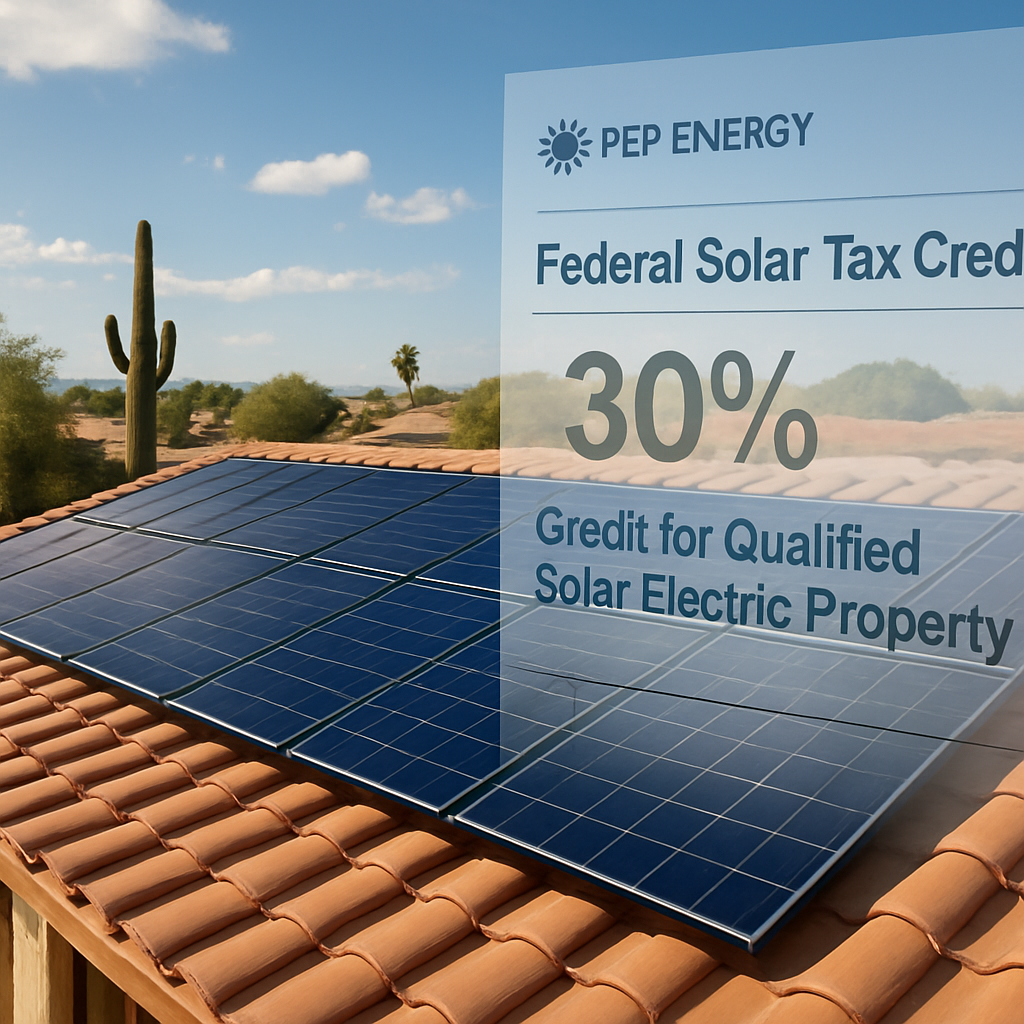
Bottom line: the Federal Solar Tax Credit is a powerful lever that can make solar affordable faster than you might think. Keep an eye on the phase‑down schedule, gather your paperwork early, and let the credit do the heavy lifting for your wallet.
State and Local Incentive Programs
After you’ve grabbed the federal credit, the next place to look is right in your own backyard – the state and local incentive programs that can shave even more dollars off a solar install. In Arizona, for example, you’ll find a residential solar tax credit that stacks on top of the federal 30% and a handful of utility rebates that pop up each year.
So, what does that actually look like on the ground? First, think of the state incentive as a second layer of “coupon” you apply after the federal one. It can be a tax credit, a rebate, or even a property‑tax exemption that reduces your assessed value. The key is that each program has its own eligibility quirks, deadlines, and paperwork.
Types of State‑Level Incentives
Most states offer one or more of the following:
- State tax credits. These work just like the federal credit but are claimed on your state income return. Arizona currently offers a 25% credit on the net system cost after the federal credit is applied.
- Rebates from utilities or public utilities commissions. They’re usually a flat dollar amount per kilowatt installed and are paid out shortly after inspection.
- Property‑tax exemptions or assessments. Some counties freeze the added value of your solar system for a set number of years, meaning your property tax bill doesn’t jump.
And don’t forget about performance‑based incentives (PBIs) that reward you for every kilowatt‑hour your system produces. Those are more common in the Northeast but are popping up in the Southwest as well.
How to Find What’s Available in Your ZIP
We always start with the DSIRE database, the nation’s most comprehensive source for state and local renewable incentives. Just pop in your five‑digit ZIP code, and you’ll get a list of every program you qualify for – from cash rebates to low‑interest loan options.
Once you’ve got the list, sort it by two things: cash‑flow impact and application deadline. Cash‑flow impact tells you how much money you’ll actually see in your pocket right away, while deadlines remind you not to miss out because paperwork lags.
For residential homeowners, the most common combo in Arizona looks like this: a 25% state tax credit plus a $500 utility rebate per kW. A 7 kW system that costs $20,000 after the federal credit would net you roughly $5,000 back from the state credit and another $3,500 from the rebate – that’s a total of $8,500 in savings.
Business Owners – What’s Different?
Commercial projects often qualify for additional programs that residential owners can’t tap. Many municipalities run “solar carve‑outs” that allocate a set amount of funding each year for businesses that install on rooftops or parking structures. Those carve‑outs might come with accelerated depreciation (the 179 deduction) that lets you write off a large chunk of the system in the first year.
In addition, several Arizona utilities offer “net‑metering” credits that are calculated at the retail rate, effectively turning every extra kilowatt‑hour you produce into a bill credit. Pair that with a state rebate, and the payback period can shrink dramatically.
One tip we’ve seen work wonders: bundle a battery storage incentive with your solar install. Some local programs give a $1,000 credit per 5 kWh of storage, which can make the difference between a simple solar array and a fully resilient, backup‑ready system.
And remember, the paperwork for commercial incentives often requires a separate application from the one you use for the federal credit. It’s worth designating a point person – maybe your CFO or a trusted project manager – to keep track of deadlines and required documents.
Now that you’ve scoped the landscape, here’s a quick cheat‑sheet to keep you moving forward:
- Check DSIRE with your ZIP code – note every program and its deadline.
- Calculate net system cost after the federal credit, then apply state credit percentages.
- File state tax credit forms with your state return; don’t forget to attach proof of rebate payments.
- For businesses, add any local carve‑out applications to your project timeline.
- Consider bundling battery storage if a local incentive exists – it can boost resilience and ROI.
By layering these state and local incentives on top of the federal credit, you’re not just saving money – you’re turning a solar project into a truly community‑backed investment. And that’s the kind of win‑win we love to see.
Utility Company Rebates and Net Metering
When your utility bill starts looking like a mystery novel, you’re probably wondering if the company that’s sending you that bill could actually help you cut it.
And that’s exactly what a lot of utilities are doing these days – they’ve rolled out rebates that act like a cash‑back coupon for any solar system you install, plus a net‑metering program that lets you turn excess sunshine into a credit on your next statement.
Why utility rebates matter
In many states, the utility that powers your home also funds a portion of the solar incentive pool. The idea is simple: encourage customers to generate clean power, then share the grid‑stabilizing benefits back with them.
For residential owners, a typical rebate might be $0.30 per watt of solar capacity, paid out after the system passes inspection. That can shave a few thousand dollars off a 7‑kW rooftop – enough to tip the ROI scale in your favor within three to four years.
Businesses get a similar treat, often with tiered payouts that increase when you add battery storage. In our experience, coupling a 10‑kW commercial array with a 20 kWh battery can unlock an extra $1,000‑$2,000 in utility credits, while also giving you backup power when the grid goes down.
Net metering 101
Net metering is basically a two‑way street. When your panels produce more than you need, the surplus flows back into the grid, and the utility records a kilowatt‑hour credit at, in many cases, the same retail rate you pay for electricity.
But the rules differ by utility. Some states, like South Carolina, still honor a true 1:1 credit for every kilowatt‑hour you export. South Carolina net metering policies even let you lock in higher rates during peak summer months if you’re on a time‑of‑use plan.
Other utilities have moved to “net billing,” where the export credit is set at a wholesale price. That doesn’t sound as shiny, but you can still profit by right‑sizing your system so most of the production matches your daytime load, minimizing the amount you sell at the lower rate.
How to stack utility rebates with net metering
- Check your utility’s rebate portal early – many programs close as soon as the budget is exhausted.
- File the rebate application before the final inspection; most utilities require the paperwork in advance.
- Confirm the net‑metering enrollment form is submitted with the same installer who did the system design – mismatched paperwork can delay credits.
- Track the credit on your monthly statement; if you see a “kWh credit” line, that’s net metering doing its job.
- Consider a battery if your utility offers an extra storage incentive. California’s Self‑Generation Incentive Program (SGIP) adds a per‑kilowatt‑hour bonus for paired solar‑plus‑storage systems, which can double the effective rebate.
So, what does this look like in real life? Meet Maya, a Phoenix homeowner who installed a 6‑kW system last summer. Her utility offered a $500 rebate, and her net‑metering agreement gave her a 1:1 credit. After a year, Maya’s bill dropped from $200 to $70, and the utility sent her a $600 rebate check. That’s a total savings of $1,070 – roughly 12% of her original system cost.
And for a Tucson bakery, the utility’s “commercial solar carve‑out” added a $1,200 rebate, while net metering turned 3,500 excess kWh into a $1,050 credit. Combined, the bakery recouped 18% of the installation cost in the first year alone.
Bottom line: utility rebates and net metering are two sides of the same coin. Grab the rebate first, lock in the net‑metering enrollment next, and watch your solar investment pay for itself faster than you thought possible.
Financing Options and Incentive Eligibility
So you’ve got the federal credit and maybe a state rebate in your pocket—great, but how do you actually pay for the panels? That’s the question most homeowners and small business owners ask when the numbers start looking real.
Why financing matters
In Arizona the average residential system runs between $15,000 and $25,000 before incentives. Most folks don’t have that kind of cash sitting on a shelf, so a smart financing plan can turn a big, one‑time outlay into a manageable monthly bill—often lower than what you’re already paying the utility.
Loan‑based options
Traditional solar loans work a lot like a home equity line: you borrow the pre‑credit amount, lock in a fixed interest rate, and repay over 5‑20 years. Because the loan is secured by the system itself, rates tend to be lower than a personal loan, and you keep ownership, which means you can still claim the federal and state credits.
What we’ve seen work best is a “zero‑down” loan where the lender covers the entire upfront cost and you start paying once the system is online. Your first payment might be $100‑$150 a month, and the savings on your electric bill usually offset most of that.
Power purchase agreements (PPAs) and leases
If you prefer not to own the hardware, a PPA or lease can be a good fit. Under a PPA you agree to buy the electricity the system produces at a set rate, typically 5‑10 % lower than the utility’s tariff. A lease is similar, but you pay a flat monthly fee for the use of the panels.
Here’s the catch: neither a lease nor a PPA lets you claim the federal tax credit. The provider claims it instead, which is why the per‑kilowatt price is usually higher than an owned system. For businesses that want predictable costs without the paperwork, a PPA can still make sense, especially when you pair it with a battery incentive that the provider can bundle.
Battery financing and incentive eligibility
Adding storage changes the game. Many utilities and state programs offer an extra $1,000‑$2,000 credit per 5 kWh of battery capacity. To qualify, the battery must be installed at the same time as the solar array and be sized for backup, not just peak‑shaving.
Because batteries are pricier, a separate loan or a “solar‑plus‑storage” package is common. Look for lenders that treat the battery as part of the same loan—this avoids double paperwork and often secures a better APR.
Eligibility checklist for incentives
- System must be new, installed after 2021, and placed on your primary residence or a business you own.
- All rebates and credits are applied to the net system cost—so you need a detailed invoice that separates equipment, labor, and any third‑party rebates.
- For battery incentives, the storage unit needs at least a 3 kWh capacity and must be grid‑connected.
- Your credit score should be 660 + for most low‑interest solar loans; some programs will still work with lower scores but at a higher rate.
- Make sure the installer submits the rebate application before the final inspection—missed deadlines can wipe out a $1,000‑$2,000 check.
Putting it all together
Imagine you’re a Phoenix homeowner with a 7 kW system costing $22,000. After the 30 % federal credit ($6,600) and a 25 % state credit ($3,850) you’re left with $11,550. A zero‑down loan at 3.5 % over 15 years would be roughly $85 a month. Add a $1,500 battery incentive and the loan drops to $75. Your utility bill might fall from $150 to $50, meaning you’re net‑positive from day one.
For a Tucson bakery installing a 10 kW commercial array, the numbers look similar but the business can also claim accelerated depreciation, which speeds up cash flow. Pair that with a utility storage incentive and the payback period can shrink to under three years.
Quick tip
Before you sign anything, ask the installer for a “cost‑after‑incentives” worksheet. It should show the pre‑credit price, each credit amount, the financed balance, and the projected monthly payment. If the numbers don’t line up with the savings you expect, walk away—there are plenty of honest providers in Arizona.
Bottom line: financing isn’t a shortcut; it’s the bridge that lets you capture every solar energy incentive without draining your savings. Pick the option that keeps you in ownership if you want the tax credits, or choose a PPA if cash flow certainty matters more. Either way, a clear financing plan turns those incentives from “nice to have” into a real, money‑saving reality.
Comparison of Major Solar Incentives
When you start stacking solar energy incentives, it can feel a bit like juggling three different coupons at once. You’ve already seen how the federal tax credit slashes a chunk off your bill, but how does that stack up against what Arizona offers or what your utility might throw in?
Federal Investment Tax Credit (ITC)
In a nutshell, the ITC lets you claim 30 % of the total system cost on your federal tax return—provided the system went live before the end of 2025. That’s a dollar‑for‑dollar reduction, not a deduction, so even a modest tax bill gets a big boost. If you’re a homeowner with a $20,000 install, you’re looking at a $6,000 credit that drops straight to zero on your next filing.
What’s key to remember is that the credit is non‑refundable and rolls over if you don’t have enough tax liability this year. And, as EnergySage explains, you can keep carrying any leftover credit forward for future years — so the benefit can stretch beyond the 2025 deadline.
Arizona State Tax Credit & Rebates
Arizona adds its own flavor to the mix. The state tax credit is 25 % of the net system cost after you’ve applied the federal ITC. Using the same $20,000 example, that second layer carves out another $3,500, assuming the federal credit has already been taken.
On top of the credit, many local utilities hand out a flat‑rate rebate—often $500 per kilowatt installed. For a 7 kW home system that’s an extra $3,500 in cash, paid shortly after inspection. The state credit plus the utility rebate can push total savings past $13,000 on a $20,000 project.
Utility Rebates and Net‑Metering Credits
Utility programs vary, but the two big pieces are a upfront rebate and a net‑metering credit that shows up on your monthly bill. The rebate is a one‑time check; the net‑metering credit is a recurring “kWh credit” that offsets the electricity you pull from the grid.
For residential customers, the typical rebate is $0.30 per watt. That translates to $2,100 on a 7 kW system. Meanwhile, net‑metering in Arizona usually mirrors the retail rate, meaning every extra kilowatt‑hour you export earns you the same price you’d pay to buy it.
Businesses get a slightly richer package—some utilities add a storage bonus if you pair a battery with your solar array. That can be an additional $1,000‑$2,000 credit, making the payback curve steeper.

Quick Comparison Table
| Incentive | How It’s Applied | Typical Value for a 7 kW Home |
|---|---|---|
| Federal ITC | Tax credit on federal return (30 % of system cost) | $6,000 |
| Arizona State Credit | Tax credit on state return (25 % after federal) | $3,500 |
| Utility Rebate + Net‑Metering | Up‑front cash rebate + ongoing bill credit | $5,600 (rebate $2,100 + net‑metering savings) |
So, which incentive should you chase first? Most of us start with the federal ITC because it’s the biggest single dollar amount and it’s guaranteed as long as you file before the deadline. After that, you layer the state credit—Arizona’s 25 % is too good to ignore. Finally, lock in the utility rebate and enroll in net‑metering to keep cash flowing every month.
One mistake we see homeowners make is treating these incentives as separate silos. In reality, they’re additive, but you have to track the order: federal credit, then state credit, then utility money. That’s why we always ask our customers for a “cost‑after‑incentives” worksheet before they sign any contract.
And remember, the timing matters. The federal credit won’t be available for new customer‑owned systems after 2025, so if you’ve been sitting on the fence, now’s the moment to act. The state credit and utility rebates are likely to stick around longer, but they can shrink if the program budget runs out.
Bottom line: by comparing the three major buckets—federal, state, and utility—you can see where the biggest savings hide and plan your financing accordingly. Whether you’re a homeowner eyeing a 7 kW roof or a small business gearing up for a 10 kW commercial array, this side‑by‑side view lets you make a confident, money‑smart decision.
Future Trends and Policy Changes
When you think about solar energy incentives, it’s easy to get stuck in the “what’s available now” mindset. But the real magic happens when you peek ahead and ask, what’s coming down the pipeline? That forward‑looking view can mean the difference between a good deal and a game‑changing one.
Federal policy shifts on the horizon
First off, the federal Investment Tax Credit (ITC) is set to step down after 2025, but lawmakers are already talking about extending it or swapping it for a new cash‑grant program. In our experience, staying on top of congressional hearings or the Energy Department’s announcements gives you a heads‑up before the incentives evaporate.
Why does that matter? Imagine you’re a homeowner who just missed the 30 % credit deadline by a week. If a new grant program launches six months later, you could still capture a similar dollar amount – you just need to know it exists.
Arizona’s next‑generation rebate structures
Arizona isn’t sitting idle. The state is piloting a performance‑based incentive (PBI) that rewards you for actual kilowatt‑hours produced, not just system size. Think of it as a “pay‑for‑performance” bonus that could add a few hundred dollars a year on top of the standard 25 % tax credit.
For business owners, the PBI could be a sweetener for larger rooftop arrays, especially when paired with energy‑storage incentives that the Public Utilities Commission is reviewing. If you’re planning a commercial install, ask your installer whether the upcoming PBI can be woven into your proposal.
Utility‑driven innovations
Utilities are getting clever, too. Some are trialing “time‑of‑use net‑metering” that offers higher credits during peak‑demand hours. That means if your panels crank out power when the grid’s most stressed, you’ll earn a bigger credit on your bill.
It’s a subtle shift, but it could tilt the ROI curve for anyone with a battery backup. A residential battery that discharges during the afternoon peak could lock in those premium credits, turning a standard net‑metering setup into a mini‑revenue stream.
Emerging federal storage incentives
On the national stage, the Inflation Reduction Act opened a door for standalone battery incentives. While the current focus is on pairing storage with solar, a separate “energy‑storage tax credit” is likely to roll out in the next year. If you’re eyeing a solar‑plus‑storage system, that credit could shave another 10 % off the battery cost.
That’s why we always suggest you map out your system now, then revisit the numbers when the storage credit lands. It’s a small step that can save you a few thousand dollars.
Policy watchlist checklist
Here’s a quick cheat‑sheet to keep your finger on the pulse:
- Set a Google Alert for “ITC extension” and “Arizona solar policy”.
- Ask your installer if they’re tracking the state PBI pilot – it may be limited to a few utility service areas.
- Check whether your utility has announced time‑of‑use net‑metering rates for 2026‑2027.
- Monitor the Energy Department’s updates on the upcoming storage tax credit.
Even if you’re not ready to install today, having these dates in your calendar means you won’t miss a wave when it rolls in.
How to future‑proof your investment
So, what should you do right now? Start by building flexibility into your contract. A clause that allows you to add a battery later without penalty can capture that future storage credit. Likewise, ask for a “rebate‑stacking” provision that lets you claim new incentives as they appear.
It might sound a bit “just in case”, but that “just in case” is often where the biggest savings hide. By designing a system that can adapt, you protect yourself from policy volatility and position yourself to reap every new solar energy incentive that lands on the table.
Bottom line: the incentive landscape is evolving fast, but you don’t have to chase it blindly. Keep an eye on federal ITC talks, watch Arizona’s performance‑based pilot, stay tuned to utility net‑metering tweaks, and be ready for the upcoming storage credit. Those future trends could turn today’s solid deal into tomorrow’s standout win.
FAQ
What exactly are solar energy incentives and why should I care?
In plain English, solar energy incentives are cash‑back or tax‑break programs that shave thousands off the price of a solar install. They can come from the federal government, the state of Arizona, or your local utility. If you’re a residential homeowner or a business owner, these incentives are the reason a solar project can pay for itself in just a few years instead of a decade. Bottom line: they turn a big upfront cost into a manageable, money‑saving investment.
Who qualifies for these incentives?
Generally, any property owner who installs a brand‑new, grid‑connected system can claim the credits. That means you need to own the roof (or land) and occupy the space yourself—rental units owned by a landlord don’t qualify for the federal tax credit. For Arizona’s state credit, the system must be installed after 2021 and you have to file the appropriate state tax form. Commercial customers can also tap into accelerated depreciation, but the basic rule is: you, not a third‑party, must own the equipment.
Can I stack federal, state, and utility incentives together?
Absolutely. Think of the incentives as layers of a cake—you add one on top of the other. First, claim the 30 % federal Investment Tax Credit on your tax return. Next, apply Arizona’s 25 % state credit to the net cost after the federal credit. Finally, submit any utility rebate application and enroll in net‑metering so you keep earning credits every month. The order matters because each credit reduces the amount the next one is calculated on, so you’ll see the biggest dollar savings when you follow that sequence.
Do battery storage systems get their own incentives?
Yes, and they’re becoming a game‑changer. The Inflation Reduction Act opened the door for a separate storage tax credit, and many Arizona utilities now offer a per‑kilowatt‑hour bonus if you pair a battery with your solar array. The battery must be at least 3 kWh and installed at the same time as the panels. In practice, a 5 kWh battery could earn you an extra $1,000‑$2,000, which can dramatically lower the payback period for both homes and businesses.
How does financing affect my ability to claim incentives?
Financing doesn’t disqualify you—you just have to make sure the loan covers the pre‑incentive amount. When you take a zero‑down solar loan, the lender pays the full system cost, you claim the credits, and the loan balance drops accordingly. That means the tax credit still reduces your out‑of‑pocket expense, even though you’re repaying over time. Just ask the installer for a “cost‑after‑incentives” worksheet so you can see exactly how the loan payment stacks against your expected utility savings.
What deadlines should I be watching?
The federal ITC stays at 30 % through the end of 2025, then it steps down unless Congress extends it. Arizona’s state credit currently runs through 2026, but budget caps can close the program early, so file as soon as you have a signed contract. Utility rebates often have first‑come, first‑served windows that fill up within weeks, and net‑metering enrollment usually must happen before the final inspection. Mark these dates on your calendar—missing a deadline can cost you a few thousand dollars.
What’s the simplest way to actually claim the credits?
Start by gathering every invoice, breaking out equipment, labor, and any third‑party rebates. Fill out IRS Form 5695 for the federal credit, then attach it to your Form 1040. For the Arizona credit, use the state’s Schedule A on your state return and include proof of the rebate check you received. Finally, keep a spreadsheet of any unused credit so you can carry it forward to the next tax year. If you’re unsure, a quick call to your tax advisor can save you a lot of hassle later.
Conclusion
We’ve walked through the federal ITC, Arizona’s state credit, utility rebates, net‑metering, and financing options – all the moving parts that make “Solar energy incentives” feel like a maze.
So, what does that mean for you? It means you can stack these incentives like layers of a cake, turning a $20,000 system into a project that costs a fraction of the sticker price. In our experience, homeowners who lock in the federal credit first, then add the state credit and chase the utility rebate, often see net‑out‑of‑pocket costs under $10,000.
For business owners, remember that ownership matters: a lease or PPA might look easy, but you’ll miss out on the tax credits that can shave thousands off your balance sheet. If you’re eyeing battery storage, keep an eye on the upcoming federal storage credit – it can drop the battery cost by another 10 %.
Actionable next steps? Grab your invoices, run a quick “cost‑after‑incentives” worksheet, and schedule a short call with a PEP Energy specialist. We’ll help you verify eligibility, line up the paperwork, and make sure no deadline slips by.
Bottom line: the incentives are here, the timeline is ticking, and the payoff is real. Take the first step today and let the savings start stacking.