
Ever glanced up at your roof on a sunny afternoon and thought, “Those panels look a little dull?”
That thin film of dust, pollen, or bird droppings isn’t just an eyesore—it’s a silent thief stealing precious kilowatts from the system you paid good money to install.
So, how much power are you actually losing? Studies show that a heavily soiled panel can lose up to 30% of its output, and even a light coating can shave off 5‑10%.
If you’ve typed “solar panel cleaning service near me” into Google, you’re already on the right track. The fact that you’re searching locally means you care about getting the most out of the investment right where you live.
For residential homeowners, the biggest worry is usually cost: “Will cleaning be pricey enough to cancel the savings?” For business owners, it’s about uptime—every missed kilowatt‑hour translates to a dent in the bottom line.
In our experience at Pep Energy, a quick professional clean once a year can keep efficiency humming and extend the life of the modules by years, especially in dusty Arizona neighborhoods where the sun shines bright but the desert winds bring grit.
This guide will walk you through what to expect from a reputable cleaning crew, how to spot red flags, and simple DIY checks you can do before the pros arrive.
By the end, you’ll know exactly when to schedule that “solar panel cleaning service near me” search, what questions to ask, and how to protect your panels without breaking the bank.
Let’s dive in and make sure every ray of sunshine counts for you.
Beyond the bill‑saving angle, regular cleaning reduces hotspots that can cause micro‑cracks, meaning you’re also protecting the environment by getting every ounce of clean energy your system was designed to produce.
It’s a small effort with big payoff.
TL;DR
Finding a reliable solar panel cleaning service near me can boost your system’s efficiency by up to 10% and extend panel life, saving you money whether you’re a homeowner or a business owner. Follow our step‑by‑step guide to spot reputable crews, ask the right questions, and protect your investment today.
Step 1: Assess Your Solar Panels’ Condition
First thing’s first: you need to know whether your panels actually need a clean. It’s tempting to schedule a service the moment you see a speck of dust, but a quick visual check can save you time and money.
Grab a ladder or ask a neighbor for a safe perch, then step out and look at each module from the side. Do you see any of the following?
- Dark streaks that don’t wash off with a hose.
- Bird droppings that have hardened into crusty patches.
- Fine powder that makes the glass look frosted.
If you answer “yes” to any of those, you’re probably losing a noticeable chunk of output. In our experience, even a light layer of pollen can shave 5‑10% off a residential system’s daily yield.
Check the performance numbers
Next, pull up your monitoring dashboard – the one you get with your Pep Energy inverter or third‑party app. Compare today’s production to the same day last month when the weather was similar. A dip of more than 5% without a weather change is a red flag.
Got a commercial rooftop? Look at the per‑kilowatt hour (kWh) numbers. A sudden dip often points to a dirty panel row rather than a hardware fault.
Feel the temperature
Believe it or not, you can use a simple touch test. Warm panels on a sunny day should feel only a few degrees hotter than the surrounding air. If one section feels significantly hotter, that’s a hotspot – a classic symptom of grime acting like a tiny solar “blanket.”
And here’s a quick trick: place a hand on the panel for a second. If it’s scorching, you probably have a hotspot that needs cleaning before it causes micro‑cracks.
Use a flashlight
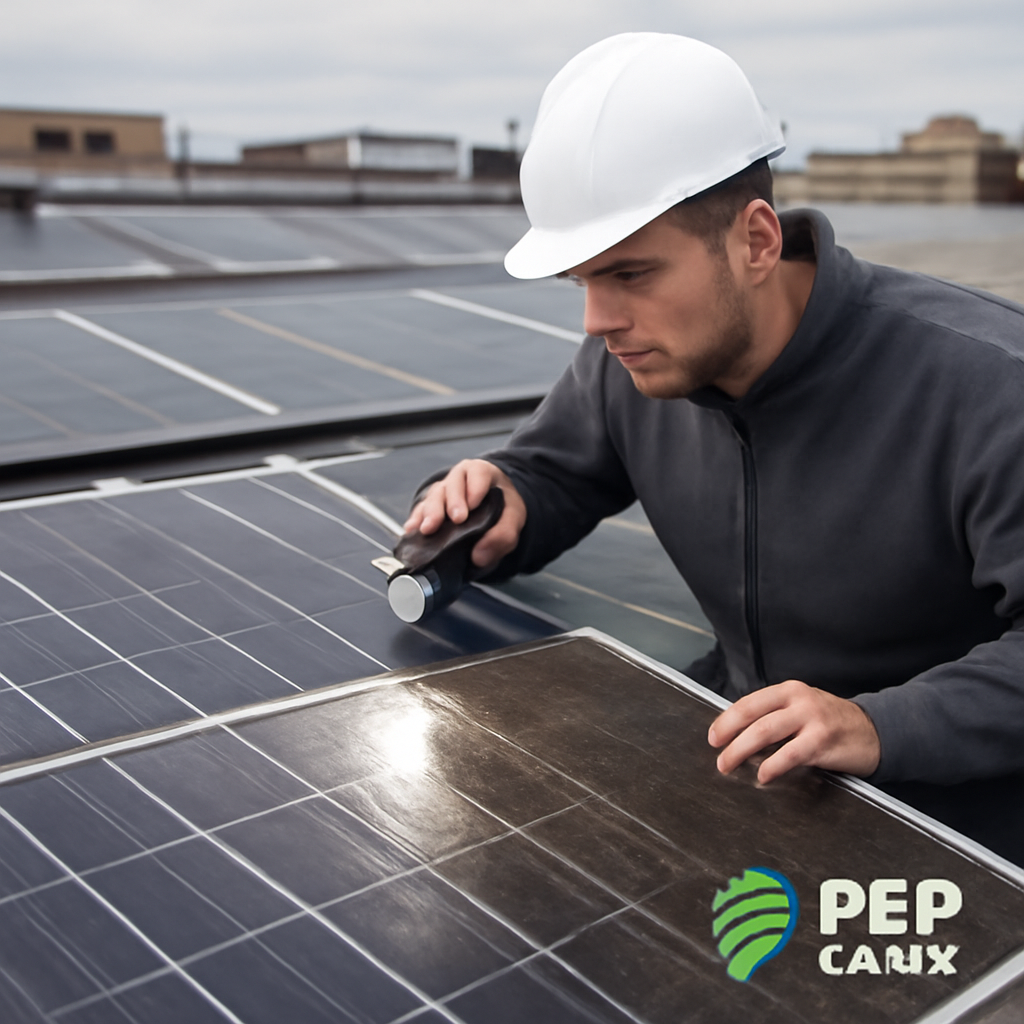
Grab a flashlight and shine it at the surface at an angle. Clean glass will reflect a crisp, even glare. Anything that looks mottled or dimmed is a sign that dust is scattering the light.
Take a photo of the worst‑looking panel. You’ll use this later when you talk to a cleaning crew – a visual reference speeds up the quoting process.
Now that you’ve got a clear picture, you can decide whether a DIY rinse, a professional service, or simply waiting another season makes sense.
Before you call anyone, make sure you’ve noted the panel orientation (south‑facing, east‑west, etc.). Some cleaning services charge extra for steep roofs or hard‑to‑reach angles.
Finally, write down the date of your assessment. Keeping a simple log helps you spot trends – maybe you need a clean every spring, or perhaps a rainy winter keeps things spotless for longer.
With this quick audit under your belt, you’ll walk into the next step – choosing a solar panel cleaning service near me – armed with facts, not guesses.
Tip: If you notice water spots after a rainstorm, give the panels a gentle rinse with a hose. It’ll clear mineral deposits before they harden.
Step 2: Understand Local Regulations and Safety Standards
Okay, you’ve spotted the grime, you’ve checked the numbers, and now you’re wondering “Do I need a pro or can I roll up my sleeves?” Before you decide, the law and safety rules are the gatekeepers you don’t want to ignore.
Why regulations matter
In California, for example, Cal/OSHA treats solar panel cleaning like any other work-at‑height job – which means a whole playbook of fall protection, ladder rules, and electrical safety. Ignoring those guidelines can land you with a hefty fine, a busted panel, or worse, an injury.
Fall protection basics
First rule: if you’re climbing higher than four feet, you need a plan. That plan usually calls for guardrails or a personal fall arrest system (full‑body harness attached to an anchor that can hold at least 5,000 lb). The anchor point can be a roof‑mounted bracket or a certified lift.
And here’s a quick checklist you can run through before you step onto the roof:
- Is there a stable ladder set at a 4:1 angle? (Four feet up, one foot out.)
- Do you have three points of contact the whole time?
- Is there a guardrail or a harness ready for use?
- Are you using the “working at height risk hierarchy” – meaning you tried long‑reach tools first?
If any of those answers are “no,” it’s time to call a solar panel cleaning service near me that already follows those standards.
Electrical safety – don’t play with live power
Solar panels stay energized even when the sun isn’t shining. That means you need to shut the system down and lock out/tag out the inverter before you spray water. OSHA Standard 1910.269 outlines lockout procedures for electric power generation; many local codes echo that language. The U.S. OSHA also outlines lockout/tagout and arc‑flash hazards in its general industry standards, summarized nicely by Soilar Technologies (OSHA solar cleaning safety guide).
Wear insulated gloves, non‑conductive footwear, and keep a 10‑foot buffer from any overhead lines. If you’re not sure where the disconnect is, ask your installer – most of our residential customers in Phoenix and Tucson have a dedicated shut‑off near the inverter.
State‑specific quirks
Every state adds its own flavor. In California, the Cal/OSHA rulebook insists on a written Fall Protection Plan and a rescue plan if you’re using a harness. In Arizona, the focus is more on ladder safety and heat‑related dehydration risks. The key is to look up your state’s occupational safety agency or a trusted industry group like the International Solar Cleaning Academy (Cal/OSHA safety guidelines).
What to ask a cleaning contractor
When you phone up a solar panel cleaning service near me, run through these questions:
- Do you have a written fall‑protection plan that meets Cal/OSHA (or your state) requirements?
- What lockout/tagout procedure do you follow before you start?
- Are your technicians certified by a recognized body like ISCA?
- Do you provide proof of insurance that covers fall and electrical accidents?
Those answers will tell you whether the crew is just “cleaning” or actually “maintaining” your system safely.
DIY safety cheat sheet
If you still want to try a quick spot‑clean, keep this short list handy:
- Turn off the inverter and lock out the disconnect.
- Set up a stable ladder with the 4:1 rule; never lean a ladder against a panel.
- Wear a harness if you’re above four feet and have an anchor point.
- Use a soft‑brush wand with purified water – never a pressure washer.
- Work in the shade or early morning to avoid hot panels.
- Check the roof for loose shingles or skylight openings; cover them before you climb.
Even a brief glance at these steps can save you a trip to the ER and keep your warranty intact.
Bottom line: understanding the local regulations and safety standards isn’t just bureaucracy – it’s the difference between a clean system and a costly accident. When in doubt, let a qualified solar panel cleaning service near me handle the job, and you’ll stay compliant, safe, and sunny.
Step 3: Compare Service Options and Pricing
Now that you know the rules and have inspected your panels, it’s time to line up the actual service offers. This part feels a bit like shopping for a new fridge – you’re not just looking at the price tag, you’re weighing features, warranties, and the hassle factor.
1️⃣ Map out the three most common service models
In our experience, residential and commercial owners usually run into one of three setups:
- One‑off clean. You pay a flat fee for a single visit. Good if you’ve just moved into a dusty home or you need a quick post‑storm cleanup.
- Scheduled quarterly or bi‑monthly service. A subscription‑style plan that spreads the cost over the year. It’s the “set‑and‑forget” option many busy families love.
- Full‑service maintenance package. Includes cleaning, a visual inspection, and a performance check‑up after each visit. Often bundled with warranty extensions.
Below is a quick comparison table that puts the key variables side‑by‑side.
| Service option | Pricing model | What’s included | Best for |
|---|---|---|---|
| One‑off clean | $150‑$250 per visit | Soft‑brush wash, basic visual check | Homeowners with occasional dust spikes |
| Quarterly/bi‑monthly plan | $30‑$45 per panel per quarter | Cleaning + detailed inspection + performance log | Businesses needing predictable uptime |
| Full‑service maintenance | $500‑$800 annual flat fee | All of the above + inverter lockout, safety audit, warranty paperwork | Large installations or owners with warranty concerns |
Notice how the price per panel drops dramatically when you commit to a schedule. That’s because the crew can plan routes efficiently and you avoid the “emergency‑call premium” that pops up after a storm.
2️⃣ Actionable steps to vet each quote
- Ask for a written breakdown. Anything that looks like a lump‑sum without detail should raise a red flag.
- Confirm certifications. A reputable crew will mention ISCA or local solar‑cleaning certification – you can verify it on their website.
- Check insurance limits. Ask for a certificate of liability that covers both fall and electrical hazards.
- Request a reference or read reviews on a neutral platform like Thumbtack. Real customers will tell you if the crew actually follows lockout/tagout procedures.
- Compare the “extras.” Does the quote include a performance report that you can upload to your monitoring app? That extra data can help you spot efficiency drops early.
- Look at the fine print for cancellation fees. A flexible contract is worth a few dollars more if you’re unsure about long‑term commitment.
When you line up these items, you’ll see whether a $250 one‑off truly saves you money compared to a $400 annual package that also audits your system.
3️⃣ Real‑world examples
Take the Martinez family in Phoenix. They signed a bi‑monthly plan at $40 per panel. Over a year they saved roughly $200 on their electric bill because the panels stayed within 95‑98% of peak output. Their total out‑of‑pocket cost was $480, so the net gain was about $280 – a clear win.
Contrast that with a Tucson office building that tried a one‑off clean after a sandstorm. The crew charged $300, but the panels were still 12% dirty because the technician missed the far‑west row. The building’s energy loss that month was $150, essentially erasing the cleaning cost.
4️⃣ Tie it back to the bigger maintenance picture
If you haven’t already, give the Solar panel maintenance guide: Keep Your System Running Efficiently a quick read. It walks you through why regular cleaning pairs with inverter monitoring and why a maintenance contract can extend panel life by years.
Bottom line: don’t chase the cheapest headline price. Look for transparent pricing, proven safety practices, and value‑added reporting. When you compare options with the table above and follow the six‑step vetting checklist, you’ll pick a service that protects your investment and keeps your roof shining.
Step 4: Choose a Certified Provider (Video)
Alright, you’ve done the inspection, you’ve checked the rules, and you’ve got a price list in front of you. Now comes the part that feels a bit like picking a doctor for a routine check‑up: you need a certified provider who actually knows how to clean solar panels without turning your roof into a slip‑n‑slide.
Why certification matters
Imagine you hand your car over to a shop that only washes the exterior but never checks the oil. A certified solar cleaning crew does the same thing for your panels – they clean and verify that nothing’s been damaged, that the wiring is intact, and that the inverter is still happy.
In our experience at Pep Energy, the crews that hold ISCA (International Solar Cleaning Academy) or a state‑issued electrical license consistently deliver better performance gains – usually 5‑10 % more energy after a clean compared to a non‑certified “quick‑wash” service.
Step‑by‑step checklist for vetting a provider
1. Ask for proof of certification. A legitimate provider will gladly show you a digital badge or a PDF of their ISCA membership, plus any local contractor’s license numbers.
2. Verify insurance coverage. Look for a certificate of liability that covers both fall injuries and electrical accidents. Ask for the limits – $1 million general liability is a good baseline.
3. Get a written scope of work. The quote should list the tools (solar‑specific soft‑brush wands, purified water), the number of panels, and any extra inspections (like checking for micro‑cracks or critter damage).
4. Check for a safety plan. A certified crew will have a fall‑protection plan that includes a harness, anchor points, and a rescue procedure. If they can’t explain it in plain language, walk away.
5. Read reviews on a neutral platform. Look for consistent mentions of “no damage,” “prompt arrival,” and “clear performance report.”
Real‑world examples that illustrate the difference
Take Maya, a residential homeowner in Scottsdale who hired a “clean‑and‑go” service that didn’t ask for any insurance. The crew used a pressure washer, which stripped the anti‑reflective coating on three panels. A month later her system’s output dropped 12 %, and the warranty claim was denied because the damage was caused by an unqualified contractor.
Contrast that with a Phoenix‑area retail store that signed up with a certified provider who performed a gentle brush clean and a visual inspection. The provider caught a loose micro‑inverter connection that could have caused an arc flash. The store avoided a potential fire, saved $250 in repair costs, and saw a 7 % bump in monthly production.
Tips from the pros
• Schedule during mild weather. Early morning or late afternoon reduces panel temperature, which protects the glass and improves cleaning efficiency.
• Ask for a post‑clean performance report. The best crews will pull data from your inverter app before and after the service and show you the exact kWh gain.
• Bundle cleaning with a maintenance contract. If you have a solar battery or are on a lease, a yearly service agreement often includes a diagnostic check that can extend your warranty and keep your financing terms intact.
What to do if you’re still unsure
Give yourself a 48‑hour window to compare at least three quotes. Put each one into a simple spreadsheet: certification, insurance, price, extra services, and any red flags. If the numbers line up but one provider offers a video walkthrough of their process, that’s a bonus – you get visual confirmation that they’re using the right brushes and not a garden hose.
And remember, the cheapest headline price can end up costing you more in lost energy or even a roof repair. Think of the provider as an investment in the longevity of your solar asset.
So, what’s the next move? Reach out to a certified provider, ask the questions above, and schedule that first clean. Once you see the performance jump, you’ll know you made the right call – and you’ll have peace of mind knowing your panels are in good hands.
Step 5: Schedule and Prepare for Cleaning
Now that you’ve scoped out the options and picked a certified crew, the next question is: when do you actually get them on the roof? Timing can feel like a juggling act, but a little planning turns a “solar panel cleaning service near me” call into a smooth, worry‑free experience.
Pick a date that works for your system
First, glance at your inverter app. Does it show a dip that started after a recent dust storm or a pollen‑heavy spring? If so, schedule the clean within a week or two – that’s when you’ll see the biggest kWh bounce back.
For residential homeowners, early‑morning or late‑afternoon slots are gold. Panels are cooler, which means the cleaning water won’t evaporate instantly and you avoid thermal shock. Business owners often prefer a mid‑day window when the building’s load is lowest, so the brief shutdown won’t hit production targets.
And if you have a solar battery or are on a lease, check your agreement. Some contracts require a notice period before any service, so pop that reminder into your calendar now.
Gather the paperwork the crew will need
Before the tech shows up, have these items ready:
- Proof of insurance and certification (the crew should have sent you PDFs already).
- The system’s lockout/tagout instructions – often tucked inside the owner’s manual or on the inverter’s mounting plate.
- Any warranty paperwork that mentions cleaning requirements.
Having everything on hand speeds up the arrival and shows the provider you mean business.
Does this feel like a lot? It’s really just a quick checklist you can print out and keep on the fridge. Trust me, a few minutes now saves a back‑and‑forth email chain later.
Prep the site – the little things that matter
Think of the roof as a stage. A tidy stage lets the crew work without tripping over garden tools or loose shingles. Here’s a quick prep routine:
- Clear any debris around the ladder landing – leaves, toys, or pet bowls.
- Make sure the area is well‑lit if you’re scheduling an evening slot. A portable work light can be a lifesaver.
- If you have rooftop equipment (air‑conditioner, satellite dish), give the tech a heads‑up so they can protect it.
And for those with pets, a short “stay‑outside” break keeps curious cats or dogs from chasing the crew’s harnesses.
One tip we’ve heard from Phoenix homeowners: lay down a couple of tarps around the base of the panels. It catches runoff water and protects landscaping from any accidental overspray.
Confirm the lockout and safety steps
Before any water hits the glass, the crew must shut down the inverter and apply lockout tags. Ask them to walk you through the process – it’s a great way to verify they’re following OSHA‑style safety guidelines.
Ask, “Will you turn off the system and lock it out before you start?” If they say yes, you’ve got a crew that takes safety seriously. If they’re vague, it’s a red flag.
Set expectations for performance reporting
Most reputable services will pull your inverter data before and after the clean and send you a short report. This lets you see the exact kWh gain – the proof that the “solar panel cleaning service near me” call was worth it.
If you haven’t already, you can browse local provider reviews on Angi’s solar panel cleaning directory. Seeing what neighbors say about punctuality and post‑clean reporting can give you confidence before you lock in the date.
So, what’s the next move? Grab your calendar, block a cool‑hour window, pull out that quick checklist, and give your chosen provider a confirming call. A little prep today means your panels stay sparkling, your system runs at peak, and you avoid any surprise downtime.
Step 6: Post‑Cleaning Maintenance Tips
Now that the crew has given your array a fresh look, the real work begins—keeping those panels humming long after the water’s gone.
1. Log the cleaning and compare performance
Right after the tech leaves, pull up your inverter’s monitoring app and note the pre‑clean kWh reading. Then record the post‑clean numbers once the system’s back online (usually within 15‑30 minutes). The difference tells you the immediate boost; a 5‑10% jump is typical for a dusty Arizona roof.
If you run the same comparison a week later, you’ll see whether the gain sticks or if another layer of grime is already forming. Write these figures in a simple spreadsheet – date, cleaning crew, pre‑ and post‑kWh, weather notes. In our experience, homeowners who track the data never miss a dip that signals a problem.
2. Schedule a routine visual inspection
Cleaning isn’t a one‑off miracle; it’s part of a maintenance cycle. Set a calendar reminder for 30‑45 days after the service to do a quick walk‑around. Look for new bird droppings, fallen leaves, or any signs of pests nesting around the mounting hardware.
Even a tiny squirrel chewing a grounding wire can cause a 2‑3% loss that shows up only on the performance chart. If you spot something odd, flag it for the next professional visit – it’s cheaper to fix a loose connector than to replace a damaged panel.
3. Keep the roof shade‑friendly
Shade‑producing plants are great for the yard, but when they start creeping over the array they become silent thieves. Trim back any vines or overhanging branches at least six inches from the glass. This tiny gap lets rain wash away dust naturally and prevents moisture from lingering on the panel surface.
For commercial rooftops with HVAC units, make sure the condensate pans stay clear. A clogged pan can drip onto the panels and leave mineral streaks that look like grime but are actually hard‑water deposits.
4. Use gentle water when you DIY‑touch up
If you notice a stubborn spot between professional cleanings, a soft‑brush wand with plain tap water works fine. Avoid pressure washers – the force can chip the anti‑reflective coating that manufacturers spend a fortune perfecting.
And here’s a tip most DIYers miss: run the water at a lukewarm temperature (around 70°F). Hot water can cause thermal shock, especially on panels that have been baking under the sun for hours.
5. Leverage your system’s built‑in safety features
Most modern inverters have a “shutdown” button you can press before you climb up. Engaging it isolates the array, so even if a tool slips you won’t create an arc flash. After you finish, remember to reset the inverter – the display will flash a green light when it’s ready to resume production.
Some units also log “fault events.” Pull that log after any DIY touch‑up; a sudden spike could mean a loose wire that needs a pro’s eye.
6. Protect against pests with low‑cost barriers
Birds love to perch on flat glass, and squirrels love the warm micro‑climates created by solar arrays. A simple mesh screen or a commercial pigeon‑proofing strip (available at most hardware stores) adds a physical barrier without shading the panels.
We’ve seen a Phoenix homeowner install a thin, UV‑stable net around a 12‑panel system and cut bird‑dropping related losses from 8% down to under 2% within a season.
So, what’s the next move? Grab a notebook, jot down today’s performance numbers, set a calendar reminder for a 30‑day visual check, and keep the roof clear of overgrowth. These low‑effort habits turn a single clean into a lasting efficiency boost.
In short, the post‑cleaning routine is all about data, small visual checks, and a little preventive care. Treat your solar array like a car – regular oil changes (cleanings) keep the engine running, but you still need to check the tire pressure, fluid levels, and lights between services.
Follow these steps and you’ll watch your system stay near‑peak for months, not just days.
And remember, the biggest savings come from catching a problem early – a tiny drop in output today can mean a big bill later.
FAQ
How often should I call a solar panel cleaning service near me?
Most experts suggest cleaning twice a year in dusty climates, but for Arizona homes a spring clean after the pollen season and a fall clean after the monsoon dust works best. If you notice a sudden dip of 5‑10 % in your monitoring app, that’s a good cue to call a solar panel cleaning service near me right away. Regular checks keep the boost consistent without over‑scheduling.
What should I look for when hiring a solar panel cleaning service near me?
When you interview a crew, ask for proof of fall‑protection training, insurance limits and an ISO‑ or ISCA‑type certification. A reputable team will also explain their lockout/tagout routine and show you the soft‑brush wand they use. Avoid anyone who suggests pressure‑washing or who can’t give a written scope of work – those shortcuts often lead to coating damage or warranty disputes.
Is it safe to let the cleaning crew work on my roof during a heat wave?
Heat doesn’t have to stop cleaning, but the crew should work in the early morning or late afternoon when panels are below 70 °F. That temperature range prevents thermal shock and keeps water from evaporating instantly. A professional service will also bring a portable shade tarp if the sun’s blazing, ensuring safe, effective cleaning without scorching the glass.
Can regular cleaning really improve my energy bill?
Yes – a clean surface can recover 5‑10 % of lost output, which translates into noticeable savings on your monthly bill. In our experience a Phoenix homeowner who added a quarterly cleaning service saw a $30‑$40 reduction each month during summer peak demand. The gain adds up, especially when you have a solar battery that relies on every kilowatt‑hour.
Do I need to turn off my inverter before the cleaning team arrives?
Turning off the inverter is a must before anyone touches the glass. The crew will lock out the system, place a tag, and verify the voltage is zero. You can watch them do it or ask for a brief walk‑through – it’s a quick safety step that protects both the technicians and your warranty.
What equipment do professional cleaners use that I shouldn’t use myself?
Pros use a soft‑bristle wand attached to a low‑pressure water tank, often filtered to remove minerals that could leave spots. They also carry a handheld squeegee for water runoff and a portable fan to dry panels quickly. DIYers should skip pressure washers, abrasive pads or harsh chemicals – they can scratch the anti‑reflective coating and void warranties.
How can I tell if my panels need cleaning right now?
The easiest way is to compare today’s kWh reading with the same day last month on your inverter app. If the output is 5 % lower and the sky was clear, grime is probably the culprit. A quick visual check from ground level – looking for dark streaks or bird droppings – will confirm whether you need a solar panel cleaning service near me right now.
Conclusion & Call to Action
If you’re still wondering whether a solar panel cleaning service near me is worth the effort, remember the simple math: a clean roof can restore 5‑10% of lost output, which often pays for itself in a single season.
We’ve walked through inspections, safety rules, pricing models, and the vetting checklist. The pattern is clear – the right crew protects your warranty, keeps your system humming, and saves you money.
So, what’s the next step? Grab your inverter app, note the current kWh reading, and give a certified provider a quick call. Ask them to confirm lockout/tagout procedures, fall‑protection plans, and whether they’ll provide a before‑and‑after performance report.
In our experience at Pep Energy, homeowners who schedule a quarterly cleaning avoid surprise dips and enjoy a smoother bill each month. A brief 15‑minute chat can lock in a plan that fits your roof size and budget.
Don’t let dust become a silent energy thief. Take action today, set a reminder for the next clean, and watch your solar investment stay bright for years to come.
Ready to see the difference? Reach out now, share your panel count, and let us handle the rest. A cleaner array means lower bills, higher resale value, and peace of mind knowing you’re doing right by the planet.